

















The Taliban government in Afghanistan has formally expressed its commitment to ensuring the safety and security of a potential rail corridor aimed at connecting Russia to India. This ambitious infrastructure project, which seeks to bypass maritime risks, is being viewed as a strategic move to boost regional trade and create significant employment opportunities for the Afghan people.
Key highlights of the proposed rail connectivity project:
- The Taliban’s Ministry of Economy has pledged to guarantee the security of the rail route passing through Afghanistan.
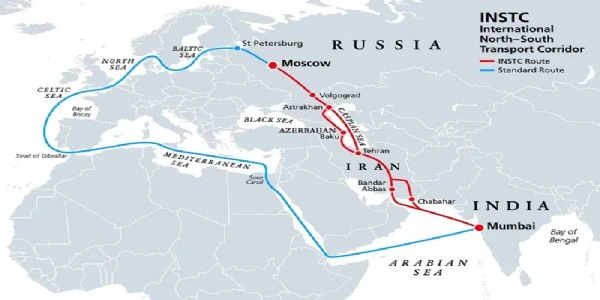
- Russian Deputy Prime Minister Marat Khusnullin proposed the rail link to provide an alternative to maritime routes, specifically to avoid risks associated with the Strait of Hormuz.
- Potential routes under consideration include transit through Turkmenistan, Iran, Afghanistan, and Pakistan.
- The project aims to facilitate India-Russia bilateral trade, which has a set target of $100 billion by 2030.
- Afghanistan stands to gain significantly from transit fees and logistics development, given its landlocked status.
Strategic Importance and Economic Outlook
According to Abdul Rahman Habib, spokesperson for the Afghan Ministry of Economy, Afghanistan is prepared to leverage its strategic geographical position to act as a bridge for this international rail network. Speaking in an interview with Russia Today, he emphasized that such a project would be a catalyst for economic growth in a country currently rich in natural resources but lacking direct access to the sea.
For Russia, the rail link serves as a vital alternative path to the Indian Ocean. With global maritime routes like the Red Sea and the Strait of Hormuz facing increasing geopolitical instability, the need for a reliable land-based transit corridor has become a priority for Moscow and New Delhi. India remains a major importer of Russian crude oil, making the security of energy and supply chains a shared interest for both nations.
Challenges Ahead
While the prospect of a trans-regional rail line is promising, experts note that the project is still in its preliminary planning stages. Turning this vision into reality requires overcoming complex hurdles, including massive financial investment, the development of robust cross-border infrastructure, and navigating the delicate regional political landscape. Furthermore, while Russia and the Taliban have strengthened economic and security ties since 2021—including a military cooperation agreement signed in May—the long-term stability of the region remains a critical factor for international investors and stakeholders. As of now, the proposal remains a strategic ambition that could redefine logistics and connectivity across Central and South Asia.