


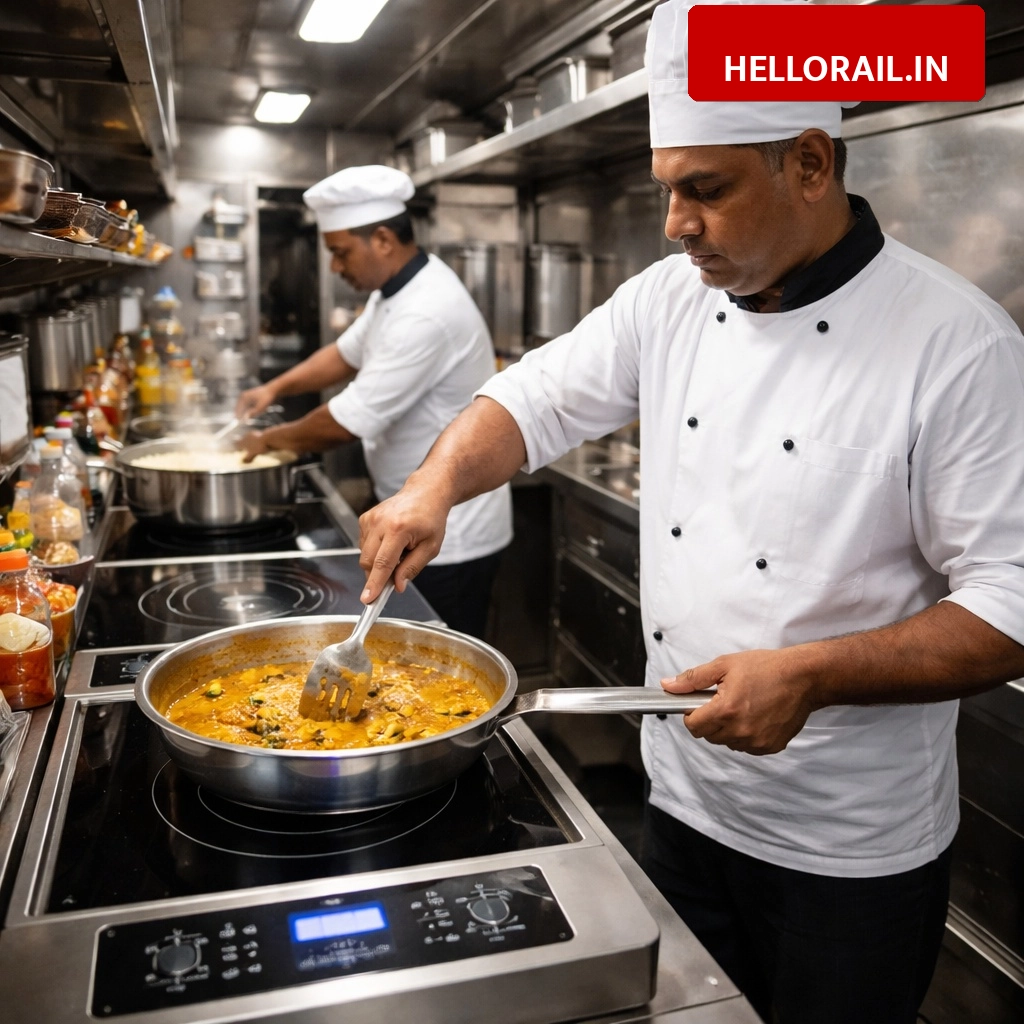

The Indian Railway Catering and Tourism Corporation (IRCTC) has changed how food is prepared on trains. Due to a severe shortage of commercial LPG cylinders, the corporation has resumed onboard cooking using electric induction stoves. This move affects catering services across a vast network of trains to ensure passengers continue to receive meals without disruption.
ℹ: Gorakhpur Railway Station: Six-lane road and airport-style entry-exit system to be developed।
Why did IRCTC switch to induction stoves?
The shift happened because of a major shortage in the supply of commercial LPG cylinders. This shortage is linked to disruptions in supply lines from the Strait of Hormuz, caused by the ongoing conflict between the US, Israel, and Iran. To keep the kitchens running, IRCTC moved toward electricity-based cooking.
How does this affect railway catering services?
IRCTC manages catering for about 1,400 trains and serves approximately 1.7 million meals every day. The transition to electric induction has impacted the operating margins of the catering wing. The change is not limited to trains; food plazas, refreshment rooms, and Jan Ahaar outlets at stations have also been told to use induction cooktops and microwave ovens.
What is the current status of kitchen electrification?
The railway network is rapidly moving away from gas-based cooking. Currently, nearly 60% of the food preparation in railway kitchens is based on electricity. This ensures that meal services remain stable despite global fuel supply issues.
Frequently Asked Questions (FAQs)
Why is there a shortage of LPG cylinders for IRCTC?
The shortage is due to disruptions in supply lines from the Strait of Hormuz, which were impacted by the US-Israel and Iran conflict.
How many meals does IRCTC serve daily?
IRCTC manages catering for approximately 1,400 trains and serves around 1.7 million meals every day.