


















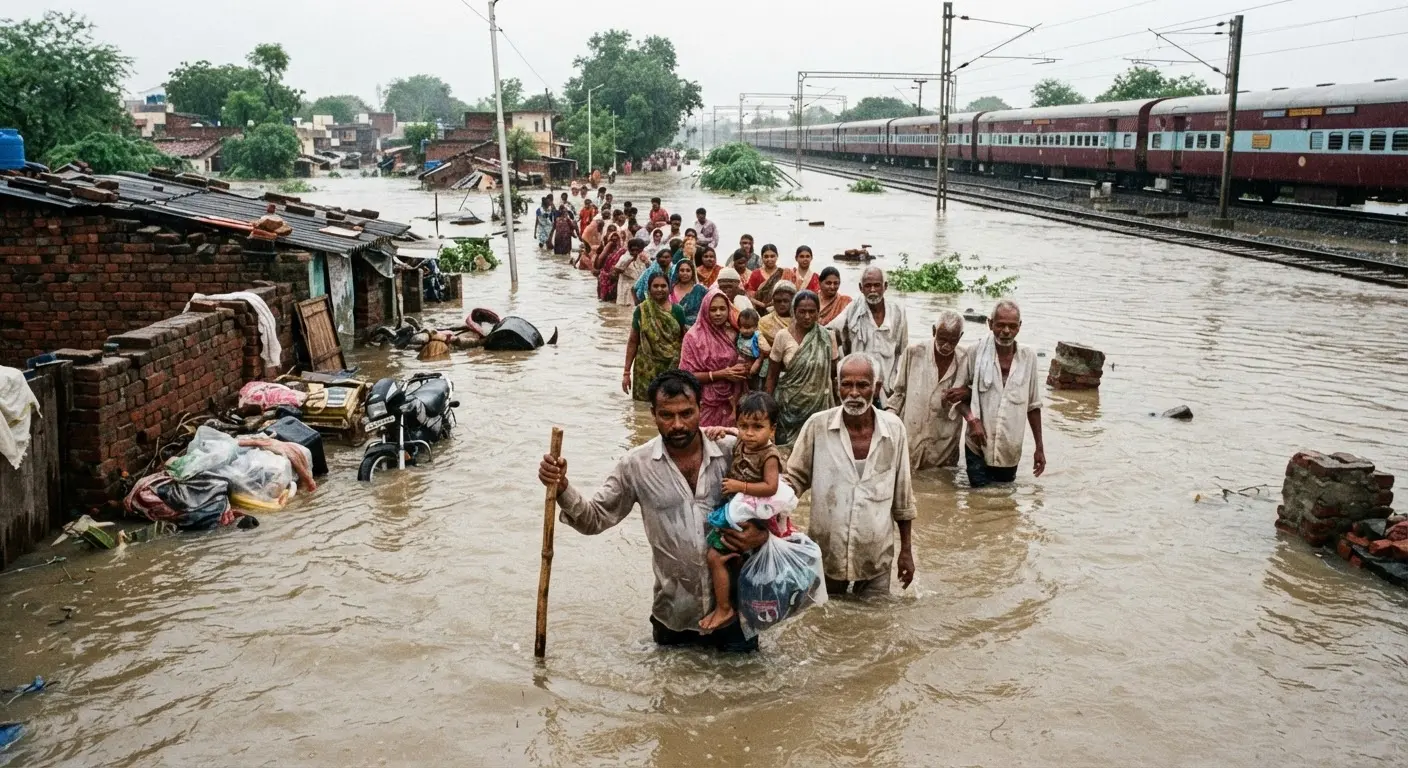

Heavy monsoon rains have triggered widespread flooding across Gujarat, severely impacting rail connectivity and daily life between July 23 and 24, 2026. The deluge, particularly intense in the Navsari and Valsad districts, has led to the suspension of critical rail services, with reports of tracks being washed away by the overflowing Kaveri River. Authorities are currently managing a major disaster response as thousands remain displaced.
- Western Railway has temporarily halted train operations between Dahanu Road and Valsad.
- Surat-Mumbai rail services faced complete suspension, with current operations restricted to a 15 km/h speed limit.
- Record rainfall: Umargam recorded 1,200 mm of rain in just 36 hours.
- Displacement: Over 22,000 people have been evacuated, with rescue operations ongoing.
- Safety measures: Dedicated help desks have been set up at stations to provide food and water to stranded passengers.
Impact on Railway Infrastructure and Operations
The intensity of the rainfall has placed massive strain on railway infrastructure. In areas where tracks were not washed away, water levels on railway bridges reached dangerous heights, forcing the Western Railway to prioritize passenger safety over schedule adherence. While some limited services have resumed, the strict 15 km/h speed restriction remains in place to ensure the structural integrity of the tracks is not compromised. Passengers are strongly advised to check the latest updates from railway authorities before heading to stations, as the situation remains fluid.
Disaster Response and Official Support
The state government, in coordination with the central administration, has mobilized a massive relief effort. Prime Minister Narendra Modi has been in contact with Gujarat Chief Minister Bhupendra Patel to ensure that all necessary central assistance is provided. Teams from the NDRF, SDRF, Army, Air Force, and Coast Guard are currently on the ground conducting rescue operations. Beyond the rail network, the flooding has forced the closure of over 1,200 roads, including the critical National Highway 48, further complicating travel across the region. With the IMD maintaining a Red Alert for several districts, citizens are urged to avoid all non-essential travel until the water levels recede and official clearances are issued.