







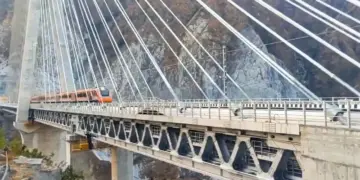




Indian Railways has achieved a monumental engineering feat in the Northeast with the completion of Bridge No. 144, a structure that towers over the landscape of Mizoram. Part of the ambitious 51.38-kilometer Bairabi-Sairang railway line, this bridge stands at a staggering height of 104 to 114 meters, significantly surpassing the 72-meter height of Delhi’s iconic Qutub Minar.
Key highlights of the project include:
• Bridge No. 144 is officially India’s second-highest pier railway bridge.
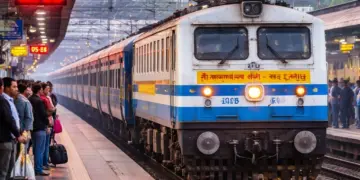
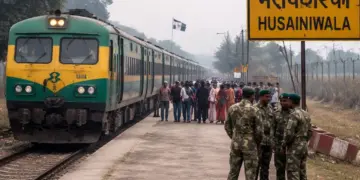
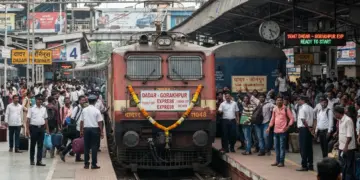
• The Bairabi-Sairang line connects Aizawl to the national railway network for the first time.
• Total project cost is estimated between ₹8071 crore and ₹8213.72 crore.
• Travel time between Aizawl and Silchar is reduced from seven hours by road to just three hours by train.
• The line features 45 to 48 tunnels and up to 148 bridges to navigate Mizoram’s rugged terrain.
Engineering in Challenging Terrain
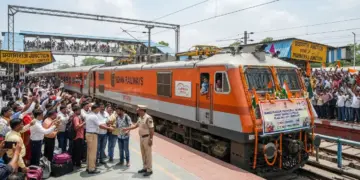
Constructing a railway line through Mizoram’s geologically complex and seismic Zone V region required specialized engineering techniques. The project, which was approved in 2008-2009 and saw construction begin in 2014, features 55 major bridges and extensive tunneling. Among these, the pier P-4 of Bridge No. 144 stands out as the highest railway pier in the state. Prime Minister Narendra Modi officially inaugurated this vital rail link on September 13, 2025, marking the start of express services connecting Mizoram to major cities like Delhi, Guwahati, and Kolkata.
Connecting Mizoram to the Nation
Overseen by the Indian Railways and the Northeast Frontier Railway, this project is a game-changer for the region. Union Railway Minister Ashwini Vaishnaw has lauded the line as a historic achievement that will catalyze trade, tourism, and regional development while easing the transport of local agricultural produce.
Looking toward the future, there are strategic plans to extend this rail line further to the Myanmar border. This extension is expected to integrate the region with the Kaladan Multimodal Transport Project, significantly boosting the strategic and economic importance of Northeast India. By replacing arduous road travel with a seamless rail experience, Indian Railways has effectively bridged the connectivity gap for the people of Mizoram.