









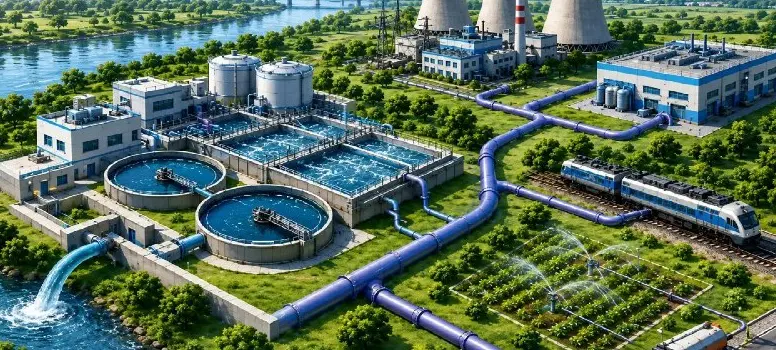

The Uttar Pradesh government has launched a significant sustainability initiative to replace groundwater reliance with treated wastewater across the state’s railway network, power plants, and factories. Announced on July 24, 2026, by Chief Secretary S.P. Goyal, this mandate requires all relevant departments to update their infrastructure plans and regulations to support the widespread adoption of recycled water. This policy aligns with the cabinet approval granted on March 23, 2026, marking a major step toward water conservation in the region.
Key highlights of the new water policy include:
- A target to achieve 50% reuse of treated wastewater by 2030, increasing to 100% by 2035.
- Implementation across multiple sectors, including railways, horticulture, and industrial construction.
- A phased rollout starting in regions currently equipped with operational Sewage Treatment Plants (STPs).
- Real-time water quality monitoring via the ‘Ganga Pulse Portal’, providing data updates every 10 minutes.
Integrating Treated Water into Railway Operations
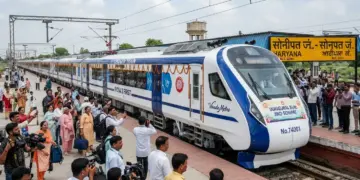
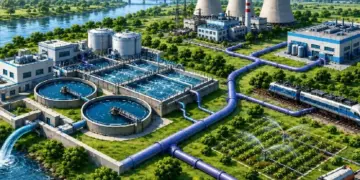
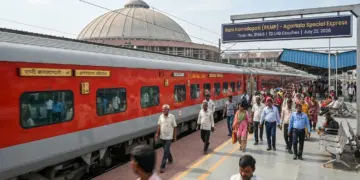
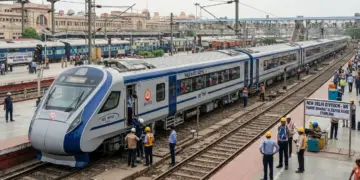
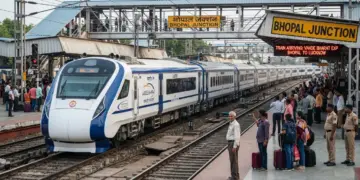
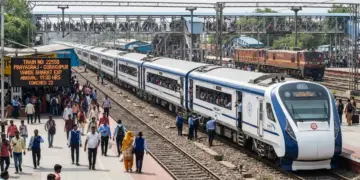
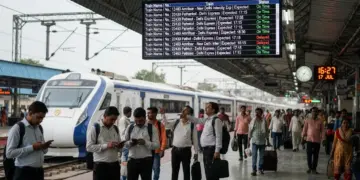
The initiative is already showing tangible results. In Kanpur, the Bhingawan 40 MLD Tertiary Treatment Plant is successfully supplying high-quality treated water to the Panaki Thermal Power Plant for cooling operations. Building on this success, the state is now proposing to utilize treated water for non-potable requirements at several key railway locations, including Prayagraj Junction, Railgaon, and Subedarganj stations.
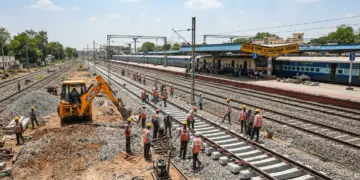
By directing water that would otherwise go to waste toward non-potable railway needs—such as station cleaning, track maintenance, and landscaping—the government aims to preserve precious groundwater levels. To ensure the safety and reliability of the water supply, the state has established various district-level committees tasked with oversight and managing any operational disputes. This move not only modernizes the state’s industrial and transport infrastructure but also sets a benchmark for environmental conservation in India’s railway sector. The continuous monitoring through the Ganga Pulse Portal ensures that all treated water meets strict safety standards before it is utilized in public spaces.