
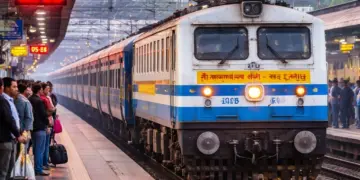




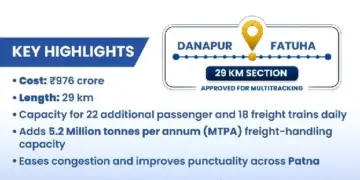

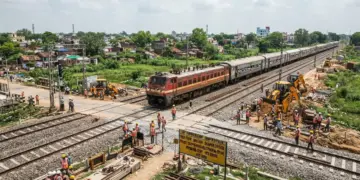
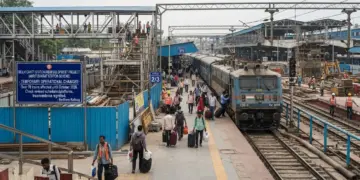






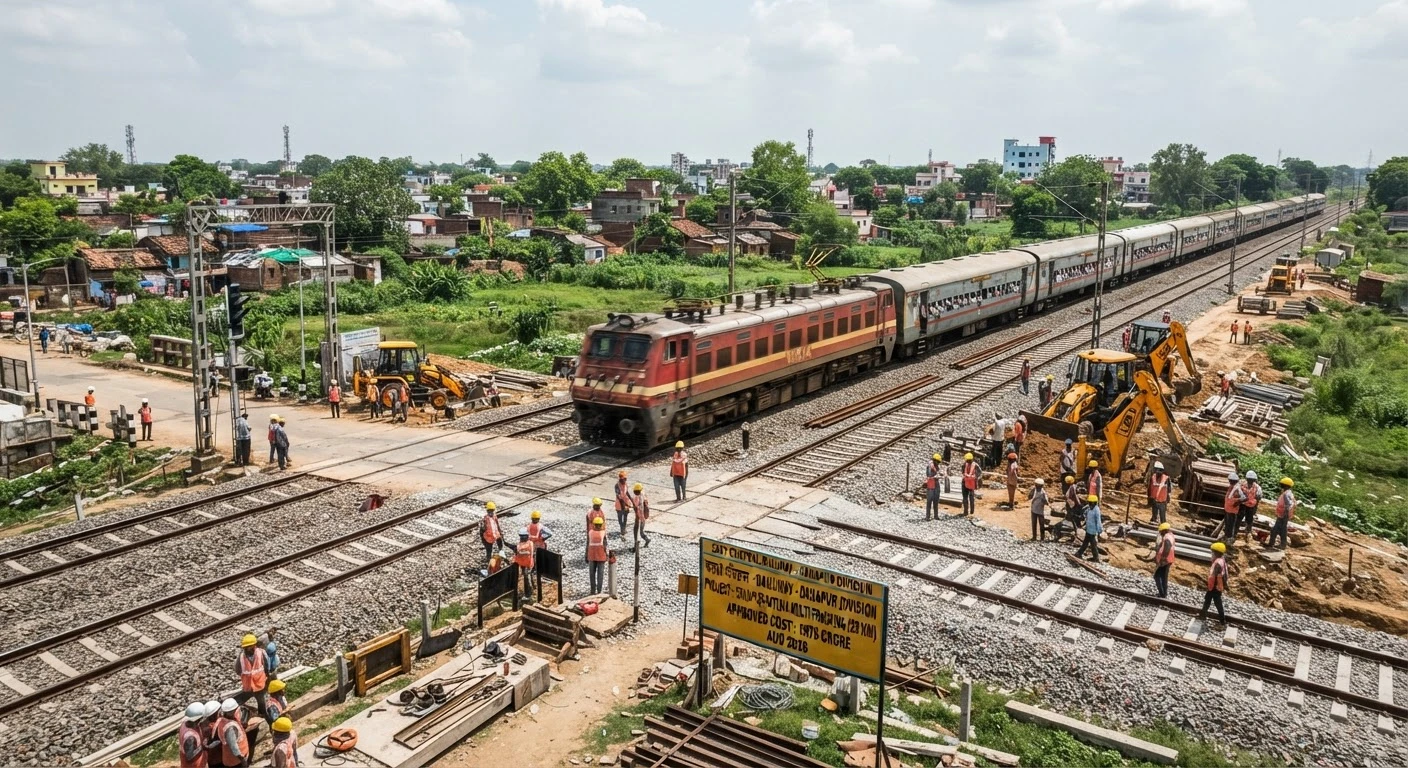

Indian Railways has officially sanctioned a major infrastructure boost for Bihar with the approval of a ₹976 crore multi-tracking project covering the 29-kilometer Danapur–Fatuha section under the East Central Railway. Announced on August 1, 2026, this ambitious project is designed to decongest the busy Patna rail corridor, reduce train delays, and significantly improve punctuality for thousands of daily commuters. Key highlights of this expansion include:
- Construction of third and fourth railway lines between Danapur and Patna.
- Addition of a third line between Rajendra Nagar and Patna Sahib.
- Laying of third and fourth lines between Patna Sahib and Fatuha.
- Introduction of 22 new passenger trains and 18 additional freight trains daily post-completion.
- Increased capacity to handle an extra 5.2 million tonnes of freight traffic per annum.
Strategic Significance for Rail Infrastructure
This project is a vital piece of the broader quadrupling program on the Delhi–Deen Dayal Upadhyaya Junction–Patna–Kiul–Bhagalpur–Khanna–Howrah route. Indian Railways has identified this stretch as a critical Energy, Mineral, and Cement Corridor. By upgrading this section, the national transporter aims to streamline the movement of essential goods across the region, which is vital for the industrial growth of Bihar and neighboring states.
Supporting Industrial Growth
Beyond passenger convenience, the upgraded infrastructure is set to play a pivotal role in the operational success of the upcoming 2,120 MW thermal power plant located at Chausa in the Buxar district. Since the power plant will rely heavily on rail transport for its bulk raw material inputs, this multi-tracking project ensures that the necessary logistical support is in place to keep the plant fully functional.
With this investment, Indian Railways is not only addressing current bottlenecks in the Patna region but is also future-proofing the network to meet the rising demands of both passenger travel and industrial logistics. Passengers can expect smoother journeys and more frequent train services once these infrastructure upgrades are completed.