

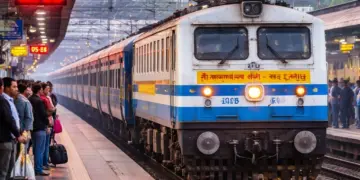

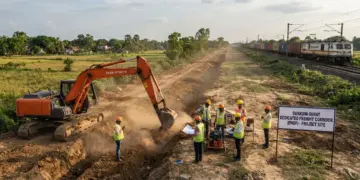

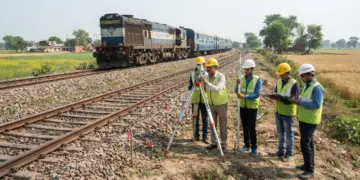





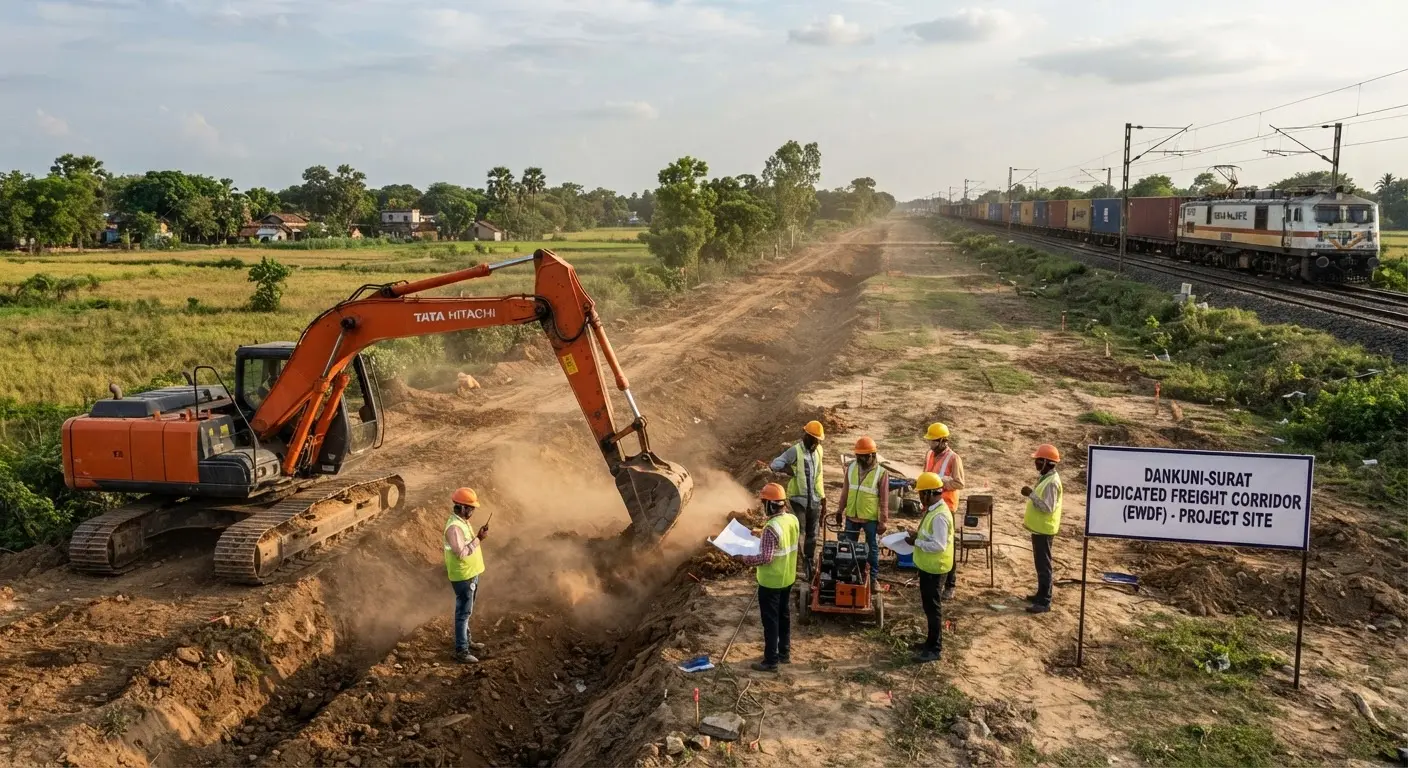

Indian Railways and the Dedicated Freight Corridor Corporation of India Limited (DFCCIL) have officially launched the development of a massive new rail link connecting Dankuni in West Bengal to Surat in Gujarat. Announced as a highlight of the Union Budget 2026, this East-West Dedicated Freight Corridor (EWDFC) is set to transform national logistics by spanning approximately 2,100 kilometers across six key states, including Odisha, Jharkhand, Chhattisgarh, and Maharashtra.
- Strategic Connectivity: The corridor will bridge the gap between West Bengal and Gujarat, cutting across the industrial heartland of India.
- Massive Capacity: It is designed to handle an initial 427.7 million tonnes per annum (MTPA) of freight.
- Future Growth: Projections indicate that traffic capacity will climb to 662.60 MTPA by 2040.
- Operational Excellence: The route will feature high-capacity electrification and the Kavach safety signaling system.
Transforming Freight Movement and Efficiency
The primary objective of this project is to drastically enhance freight speed and operational capacity while simultaneously lowering logistics costs. By diverting heavy freight traffic onto this dedicated line, Indian Railways aims to alleviate severe congestion on existing passenger and mixed-use rail networks. This shift is critical as the government pushes to increase the railway’s share of national freight transport to a target of 45%.
Fast-Tracking Implementation
Railway Minister Ashwini Vaishnaw has issued clear directives to officials to accelerate the implementation of the project. Currently, the Detailed Project Report (DPR) is in the advanced stages of preparation to lay the foundation for this infrastructure expansion. This project comes on the back of strong financial performance, with Indian Railways having achieved a record gross revenue of ₹2.74 lakh crore in the previous fiscal year.
As India continues to modernize its logistics ecosystem, the Dankuni-Surat corridor stands as a flagship initiative to ensure that freight moves faster, safer, and more efficiently across the country’s vast rail network.