







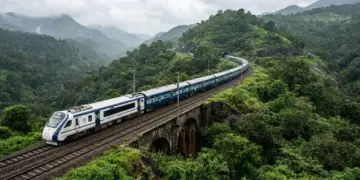





Indian Railways has demonstrated a massive commitment to infrastructure modernization and passenger safety, reporting a total expenditure of ₹1.14 lakh crore by July 2026. This figure accounts for 39% of the allocated ₹2.93 lakh crore budget for the 2026-27 fiscal year. Furthermore, the indigenous Automatic Train Protection system, Kavach 4.0, has now been commissioned across 2,633 route kilometers, marking a significant milestone in safe train operations.
Key highlights include:
- Record Spending: ₹1.14 lakh crore utilized within the first few months of the fiscal year.
- Faster Track Laying: Average new track commissioning has risen to 8.32 km per day.
- Safety Milestone: Kavach 4.0 is operational on the Delhi-Mumbai and Delhi-Howrah corridors.
- Massive Projects: 514 infrastructure projects sanctioned covering 40,000 km.
Accelerating Infrastructure Development
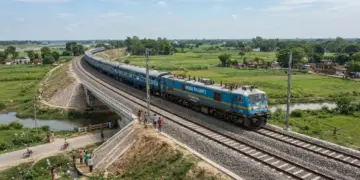
Railway Minister Ashwini Vaishnaw informed the Lok Sabha that the pace of track development has nearly doubled compared to the 2014-2019 period, jumping from 4.2 km per day to 8.32 km per day. The network is currently seeing 514 sanctioned infrastructure projects with an estimated cost of ₹8.31 lakh crore, of which 12,583 km of tracks have already been commissioned.
Advancing Kavach 4.0 Safety Technology
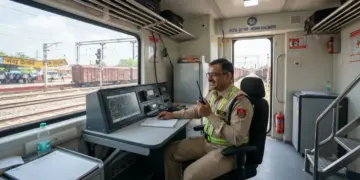
As of July 31, 2026, Kavach 4.0 has been deployed over 2,633 route kilometers. This upgraded system offers superior location accuracy, improved signaling for large yards, and direct integration with electronic interlocking. To support this rollout, ₹3,875 crore has already been spent, with an additional ₹2,066 crore earmarked for the current fiscal year. The technology is currently being installed across 21,794 route kilometers, including the high-density Golden Quadrilateral network. To date, 6,290 locomotives are already equipped with Kavach, with thousands more currently undergoing installation.
Future Growth and Freight Capacity
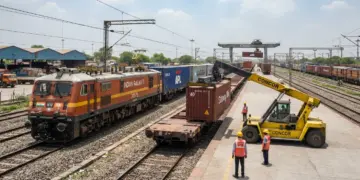
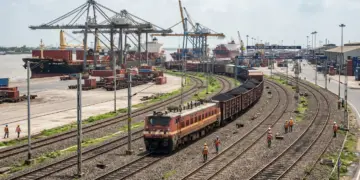
Beyond safety, the Railways continues to expand its commercial footprint. Recent approvals include the ₹976 crore Danapur–Fatuha expansion and a massive ₹18,901.68 crore tender for the 134 km Sarkhej–Dholera semi-high-speed corridor in Gujarat. These developments are complemented by strong operational performance, with freight loading reaching 1,670 million tonnes in 2025-26, cementing Indian Railways’ position as the world’s second-largest freight carrier.