















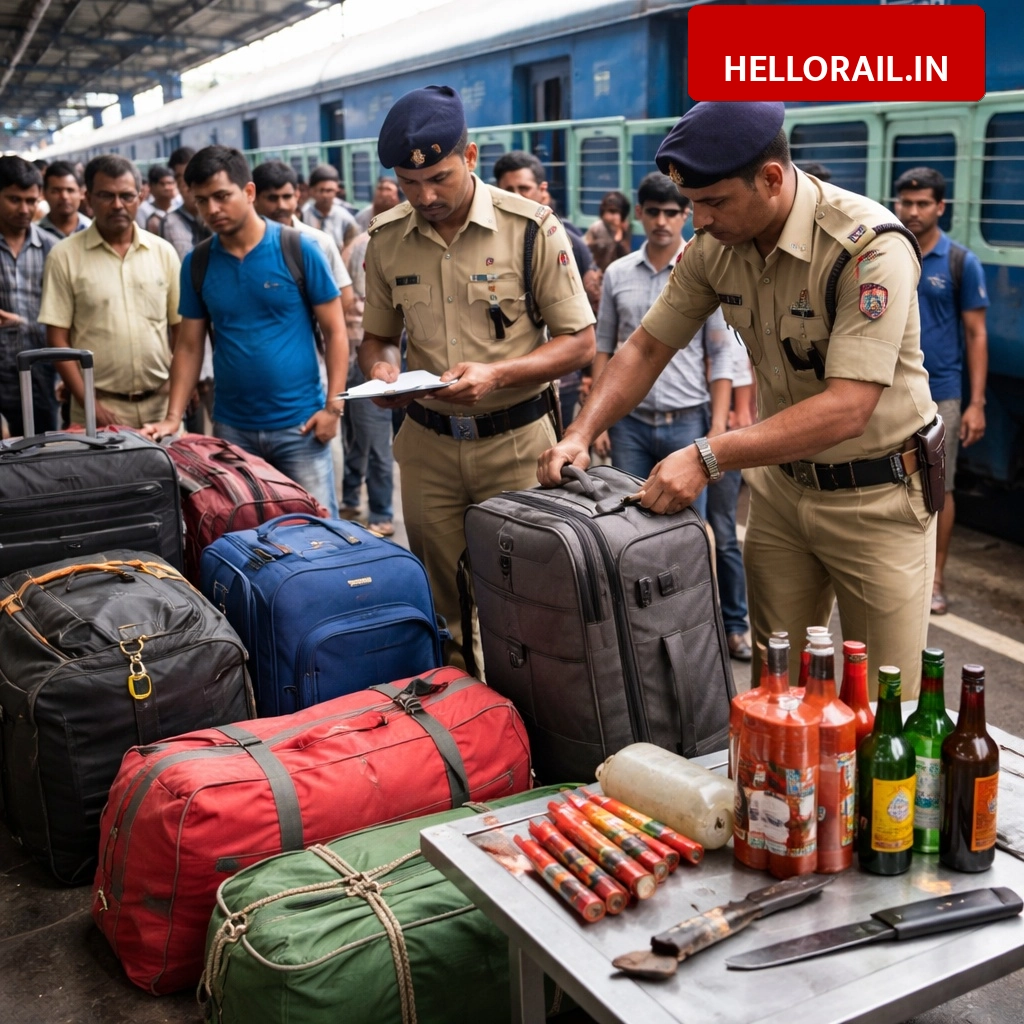

Indian Railways has reinforced its rules regarding items that passengers cannot carry on trains. These measures aim to prevent accidents and ensure the safety of all passengers. The Railway Protection Force (RPF) is currently conducting awareness campaigns to educate people about these restrictions.
Which items are banned on trains and what are the penalties
Carrying flammable or explosive materials is a serious offense under the Railways Act 1989. This includes petrol, diesel, kerosene, gas cylinders, firecrackers, and gunpowder. Other banned items include hazardous chemicals like acids, illegal weapons, and offensive materials like raw hides or rotting food. Smoking and drinking alcohol on trains or platforms are also strictly prohibited.
| Violation | Penalty/Action |
|---|---|
| Prohibited Items (Sec 164) | Up to 3 years jail or ₹1,000 fine or both |
| Excess Luggage (Unbooked) | Penalty up to 6 times the normal rate |
| Excess Luggage (Declared) | 1.5 times the normal luggage rate |
| Unauthorized Vending | Removal from train and legal action |
What are the new rules for luggage and vendors
Railway Minister Ashwini Vaishnaw stated that luggage enforcement will become stricter, similar to airline policies. Items larger than 100 cm x 60 cm x 25 cm must be booked in the brake van. Automated scanners for weight and size are being introduced at major hubs by the end of 2026. Additionally, only vendors with valid ID cards and QR codes are allowed to sell items on trains to ensure food quality and security.
Frequently Asked Questions (FAQs)
What happens if I carry excess luggage on a train?
If luggage exceeds the free allowance without booking, you may pay 1.5 times the rate. If it is not declared, the penalty can go up to 6 times the normal luggage rate.
How can I identify an authorized vendor on the train?
Authorized vendors must carry a valid ID card and a QR code issued by Indian Railways. Passengers can report unauthorized vendors to TTE, RPF, or via helpline 139.