











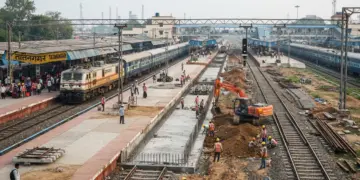

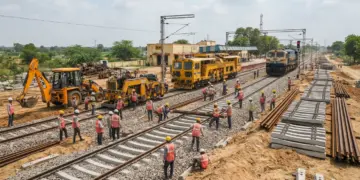

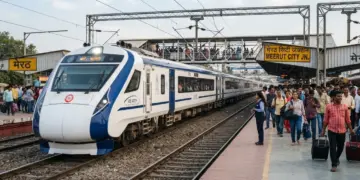





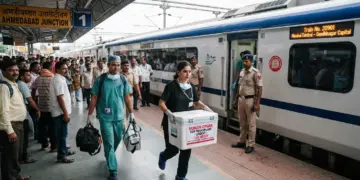



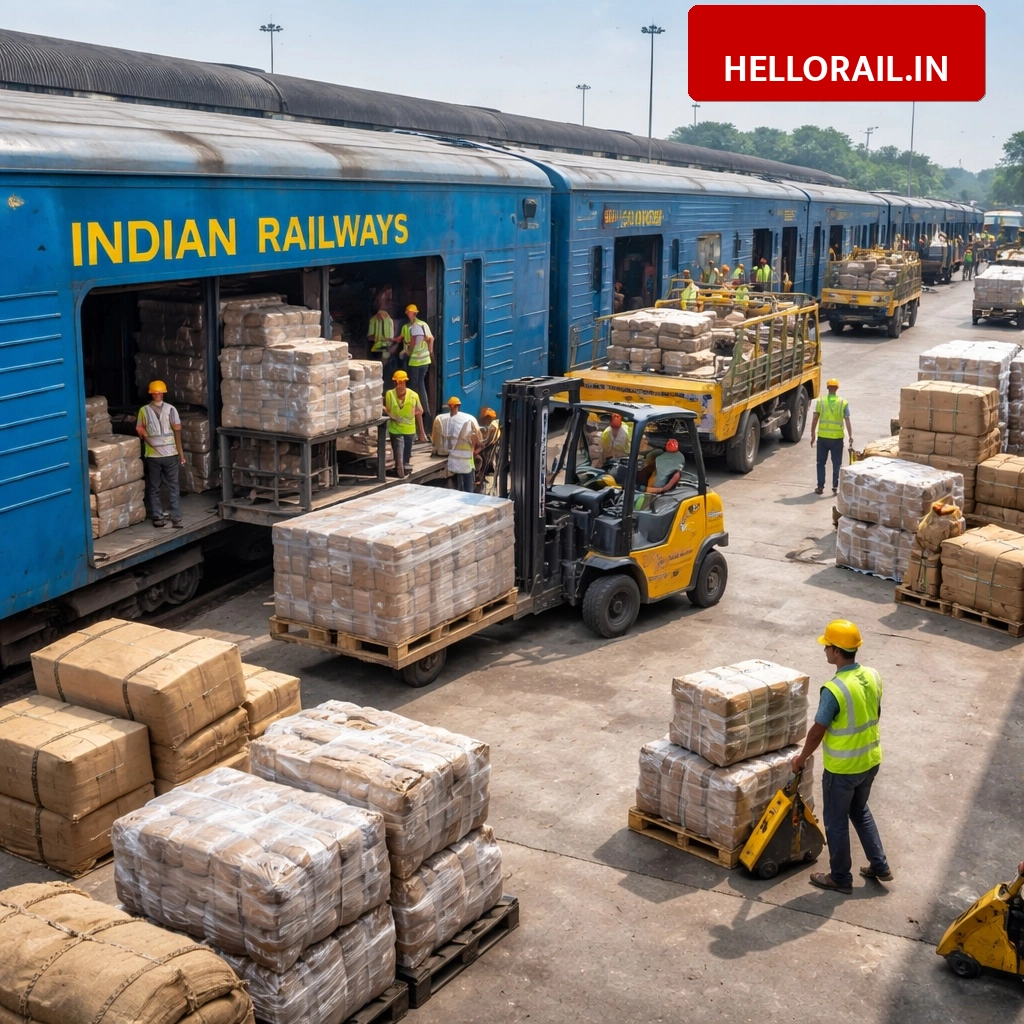

Indian Railways has introduced a new Parcel Transshipment Policy to make the movement of goods easier across the country. Under this system, parcels can now be unloaded from one train and loaded onto another at selected stations. This allows goods to reach destinations that do not have direct train connectivity.
ℹ️: New Train Announcement: Indian Railways to launch 200 new trains and 25 cargo terminals in Rajasthan।
How does the new parcel transshipment policy work?
The Railway Board issued these guidelines on February 28, 2026, and the policy became active across India from April 1, 2026. Previously, the lack of direct trains caused delays in delivery. Now, the railway will issue a single parcel way-bill from the origin to the final destination based on actual distance, which helps in reducing the overall transport cost.
What are the benefits for traders and farmers?
This move aims to promote Ease of Doing Business and increase railway revenue. Senior Divisional Commercial Manager Mr. Uchit Singhal called this a game-changer for traders and farmers in Jammu and Kashmir. The rail option is now cheaper, safer, and faster than road transport, especially for time-sensitive and perishable goods.
First successful trial of the new policy
On May 21, 2026, the Jammu Division of Northern Railway successfully sent 240 kg of iron goods from Jammu to Bengaluru using this new policy. This shipment proved that the system works effectively for long-distance transport without direct trains.
| Feature | Details |
|---|---|
| Policy Effective Date | April 1, 2026 |
| First Trial Route | Jammu to Bengaluru |
| Trial Cargo | 240 kg Iron Goods |
| Key Benefit | Single way-bill for lower cost |
| Primary Target | Farmers, Traders, E-commerce |
Frequently Asked Questions (FAQs)
What is parcel transshipment in Indian Railways?
It is a system where parcels are transferred from one train to another at notified stations to reach destinations where no direct train service is available.
Who will benefit most from this new policy?
Traders, farmers, and e-commerce companies will benefit from reduced logistics costs and faster delivery of perishable and time-sensitive goods.