









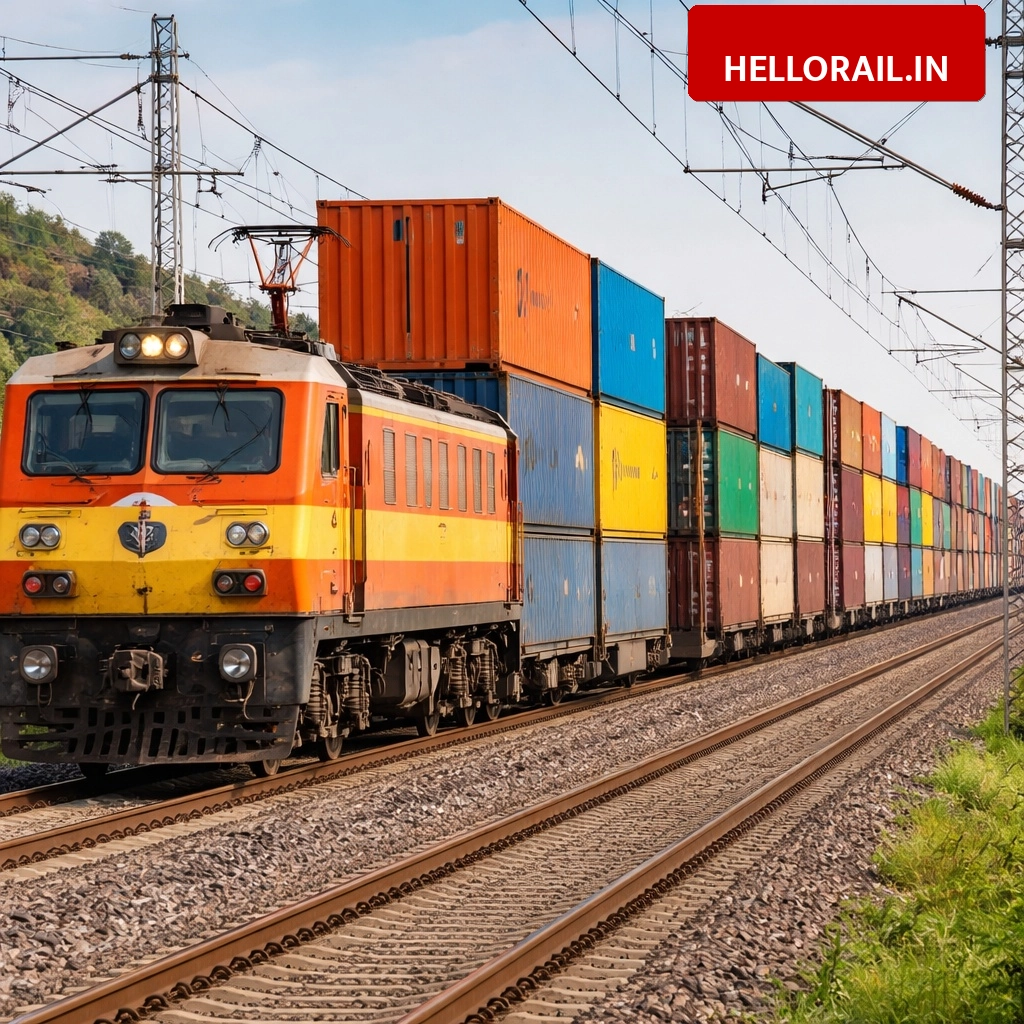

Indian Railways achieved a global milestone by operating the first ever electric double-stack container train under overhead electrification. This engineering feat took place on the Western Dedicated Freight Corridor (WDFC). While other countries use diesel engines for such trains, India successfully used electric traction to move heavy cargo.
What makes this electric double-stack train special
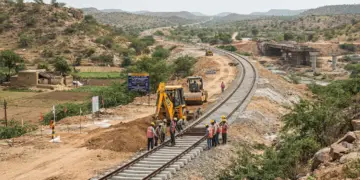
The train uses a High-Rise Overhead Equipment (OHE) system where wires are installed at a height of about 7.45 meters. This extra space allows two layers of containers to pass safely under the electric wires. Specially designed high-powered electric locomotives with advanced pantographs provide the necessary power for these long-haul journeys.
Key benefits for logistics and environment
This system allows Indian Railways to carry nearly double the cargo compared to normal freight trains. It reduces the need for road transport and lowers carbon emissions. The impact of this technology is detailed below:
| Feature | Impact/Detail |
|---|---|
| Cargo Capacity | Equivalent to 270 high-capacity trailer trucks |
| Average Speed | Expected to increase from 26 kmph to 70 kmph |
| Max Speed | Targeted at 100 kmph on DFC tracks |
| Environmental Impact | Lower fuel consumption and reduced road congestion |
Role of DFCCIL and RDSO in this project
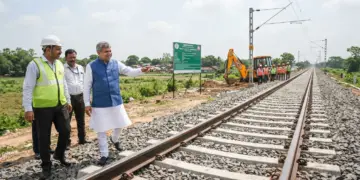
The Dedicated Freight Corridor Corporation of India Limited (DFCCIL) developed the WDFC infrastructure for this operation. The Research Design and Standards Organisation (RDSO) designed the specific BLCS–A and BLCS–B wagons. Prime Minister Narendra Modi flagged off a 1.5 km long version of this train from New Ateli to New Kishanganj on January 7, 2021.
Frequently Asked Questions (FAQs)
What is a double-stack container train?
It is a freight train that carries shipping containers stacked in two layers, allowing double the cargo capacity compared to single-stack trains.
How did India solve the overhead wire problem for these trains?
India installed a High-Rise OHE system with contact wires at 7.45 meters and used locomotives with special high-reach pantographs.