























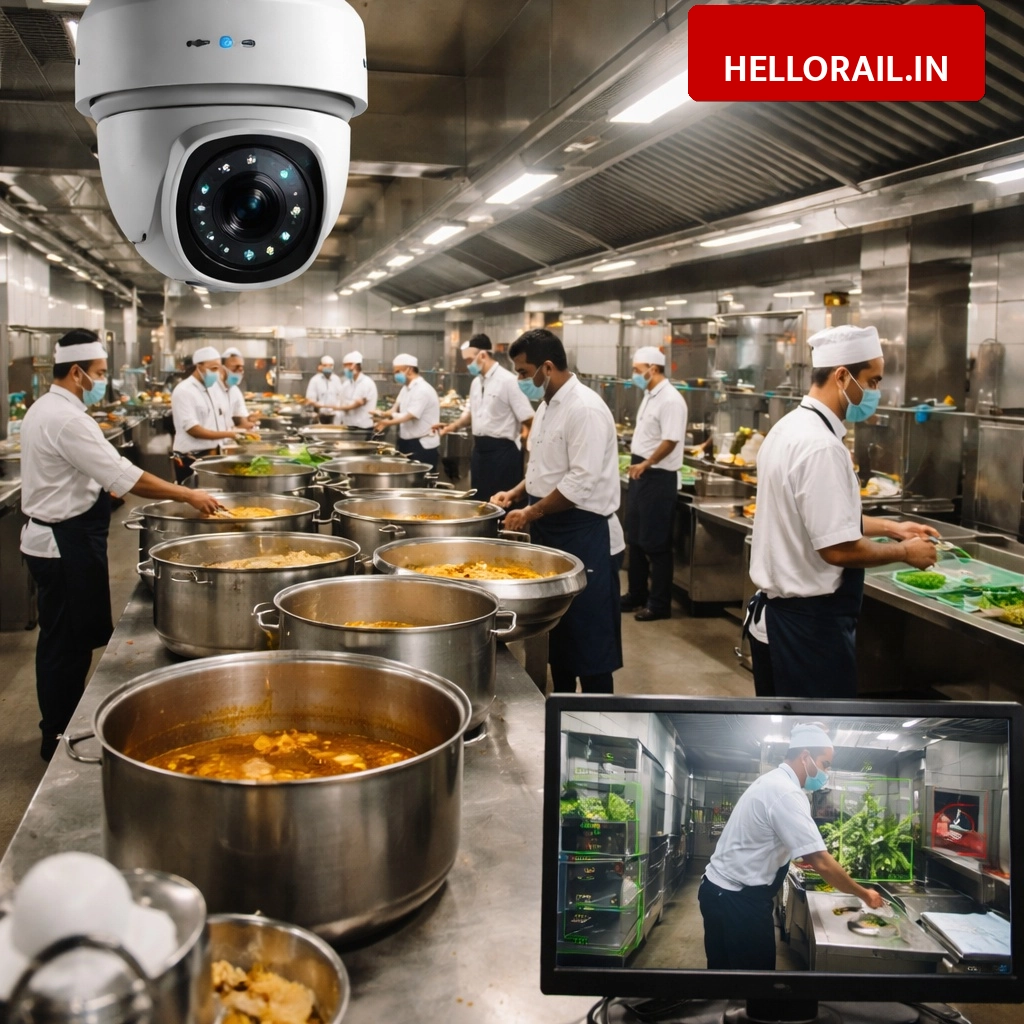

IRCTC has expanded its AI-based monitoring system to ensure passengers get clean and high-quality food. A central control room in New Delhi now tracks live feeds from over 800 kitchens across the country. This system can monitor kitchens located even 2500 km away from the headquarters 24 hours a day.
How does the AI monitoring system work?
IRCTC installed around 2,394 to 2,400 AI-enabled cameras in its kitchens. These cameras are sensitive enough to detect pests as small as 7-8 mm. The system identifies nine types of hygiene violations and sends real-time alerts to the monitoring team in Delhi. If a problem is found, the local staff is informed immediately, and action is usually taken within two hours.
What specific violations are being tracked?
The AI system focuses on strict hygiene rules to prevent food contamination. The most common issues detected include:
| Violation Category | Details |
|---|---|
| Staff Gear | Not wearing head caps or transparent gloves |
| Cleaning Habits | Poor mopping or wiping practices |
| Pest Control | Presence of rodents, flies, or cockroaches |
According to IRCTC Chairman and Managing Director S.K. Jain, this system ensures food is prepared and packed safely. On average, the system generates 350 to 450 error tickets daily to maintain standards.
Frequently Asked Questions (FAQs)
AI कैमरे किन चीजों की निगरानी करते हैं?
ये कैमरे स्टाफ द्वारा हेड कैप और दस्ताने न पहनने, सफाई में कमी और चूहों या कॉकरोच जैसे कीटों की मौजूदगी का पता लगाते हैं।
शिकायत या गलती मिलने पर कितनी देर में एक्शन होता है?
सिस्टम रीयल-टाइम अलर्ट भेजता है और संबंधित कर्मियों को सूचित किया जाता है। आमतौर पर समस्या का समाधान 2 घंटे के भीतर कर दिया जाता है।