











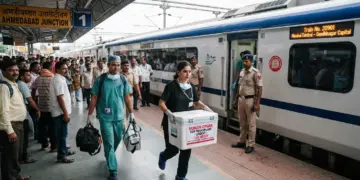


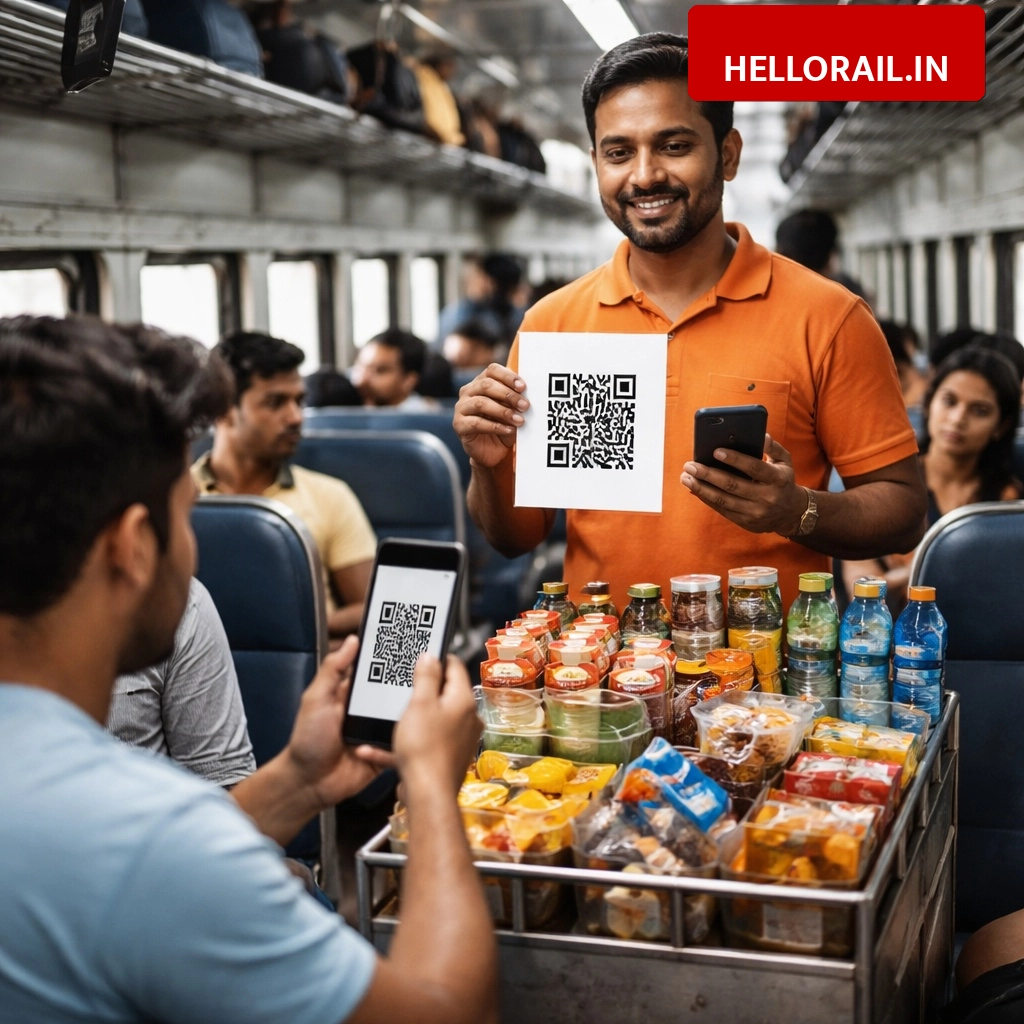

Indian Railways has introduced a new rule to improve the quality of food and services for passengers. Now, only authorized vendors with a valid identity card and a QR code can sell items on trains. TTEs and RPF personnel have been directed to strictly monitor the trains and take action against anyone selling goods without these official credentials.
ℹ️: New Train Announcement: Northern Railway to run Katra-Haridwar Special Train for Somvati Amavasya।
Who can sell items in trains now?
According to the Ministry of Railways, all vendors, helpers, and catering staff must carry a QR code-enabled ID card. This ID is linked to their Aadhaar number, police verification, and medical fitness details. Food packets will also have QR codes that show the name of the kitchen and the date of manufacturing to ensure traceability and hygiene.
What happens to unauthorized vendors?
The Railway Protection Force (RPF) and TTEs are conducting special drives to stop illegal hawking. If a TTE finds a vendor without a valid ID, they will report it to the control room and RPF. The unauthorized seller will be detained and acted against at the next station. Unauthorized vending is punishable under Section 144 of the Railways Act, 1989.
Key details of the new vending system
| Feature | Detail |
|---|---|
| Mandatory Requirement | QR Code enabled Official ID Card |
| ID Linkage | Aadhaar, Police Verification, Medical Fitness |
| Food Tracking | QR codes on packets for kitchen name and date |
| Enforcement Agency | RPF and TTEs |
| Legal Action | Punishable under Section 144 of Railways Act, 1989 |
Frequently Asked Questions (FAQs)
How can passengers identify an authorized vendor?
Authorized vendors must carry an official identity card with a QR code. Passengers can check this ID to ensure the vendor is verified by the Railways.
What information is linked to the vendor’s QR code?
The QR code contains the vendor’s name, Aadhaar number, police verification status, and medical fitness records.