

























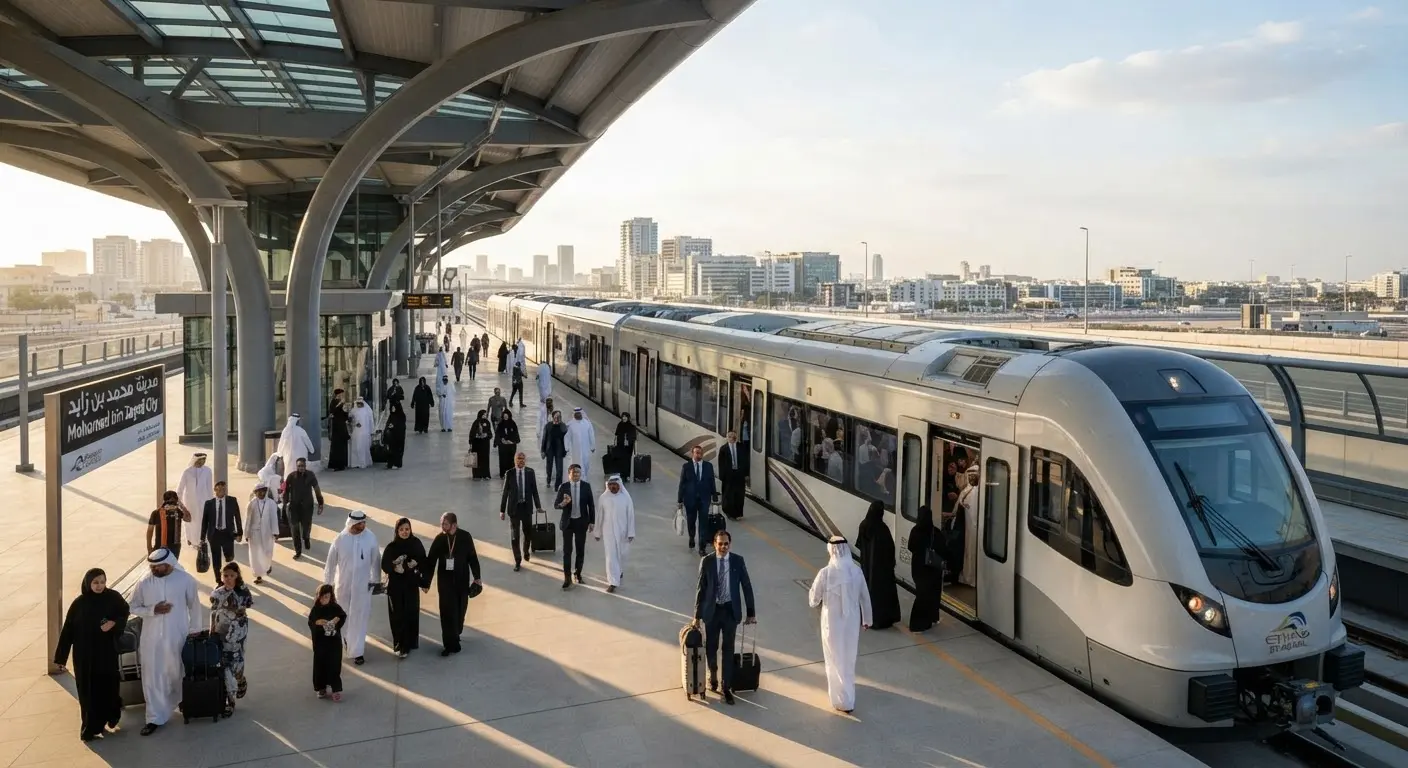

Etihad Rail is rapidly reshaping the landscape of public transport in the United Arab Emirates, marking a significant milestone in regional connectivity. Since the launch of its initial passenger operations on June 30, 2026, connecting Abu Dhabi’s Mohamed bin Zayed City and Fujairah’s Al Hilal City, the network has seen robust public interest, recording over 70,000 ticket sales. Data indicates that passengers are proactively planning their trips, with an average booking window of 12 days in advance, highlighting the growing preference for sustainable rail travel.
Upcoming Expansion Phases
The network is poised for a major growth spurt in the coming months. A key addition, the Dubai Al Yalayis station near Jumeirah Golf Estates, is nearing completion and is set to welcome passengers on September 30, 2026. This date will also mark the formal commencement of services to Dubai and Al Dhaid in Sharjah. Following this, the network will extend into the Al Dhafra region on November 30, 2026, with the early opening of stations in Liwa and Madinat Zayed. The initial passenger line is scheduled for full completion by March 30, 2027, following the inauguration of the Sharjah University City station.
Advanced Technology and Future Vision
Etihad Rail is not just about passenger movement; it integrates freight, passenger, and high-speed rail into a single, resilient national system. The project leverages AI-enabled inspection systems for real-time track monitoring and predictive maintenance to ensure safety and efficiency. Looking ahead, the UAE is working on a high-speed rail project designed to connect Abu Dhabi and Dubai in just 30 minutes at speeds of up to 350 km/h, with an operational target of 2030.
Travel Regulations
To maintain high safety and service standards, the Etihad Rail Passenger Charter is strictly enforced. Passengers are required to possess valid tickets and undergo security screenings. Travelers should be aware that the authority has implemented a strict penalty system for violations, with fines ranging from 100 to 10,000 dirhams. This project, championed by leadership including Sheikh Khaled bin Mohamed bin Zayed Al Nahyan, remains a cornerstone of the UAE’s vision for sustainable economic growth and seamless regional integration.