


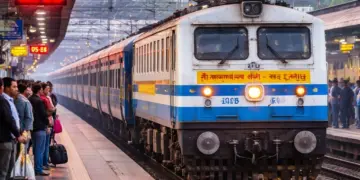


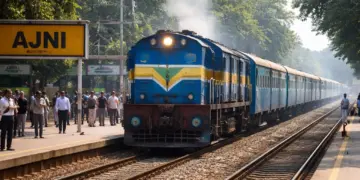










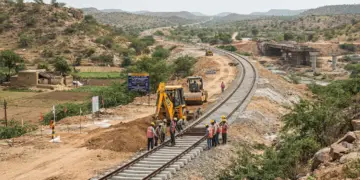



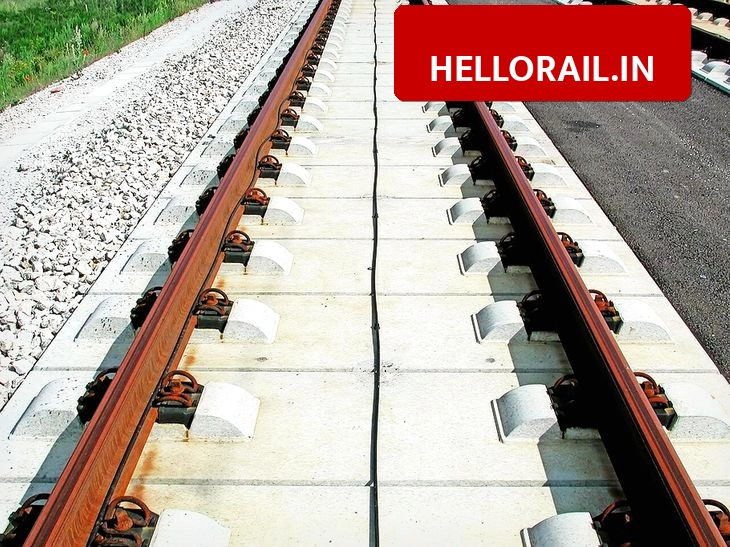

Indian Railways is adopting a new indigenous technology to increase the speed of trains on station loop lines. Currently, trains move at about 15 kmph on these tracks, but the new system will allow them to travel at 60 kmph. This move aims to reduce operational delays and improve overall punctuality.
ℹ: Panipat Railway Station: First public EV charging station to be set up for passengers।
What is the new BLT-IFS (CT-52) technology?
The Research Design and Standards Organisation (RDSO) developed the indigenous Ballast-Less Track (BLT-IFS CT-52) technology. Unlike traditional tracks, these are concrete tracks that do not require stone ballast. These tracks are strong enough to handle heavy trains with a 25-tonne axle load and minimize the risk of tracks sinking or breaking.
How will this benefit passengers and operations?
The increase in speed from 15 kmph to 60 kmph will help trains clear platforms faster. This will reduce the time trains spend waiting at outer signals, making journeys more timely and comfortable. Additionally, the maintenance of platform tracks will become easier for the railway staff.
What are the official guidelines for implementation?
Railway Board Executive Director (Track) Anurag Kumar issued orders regarding this technology on May 15. Member (Infrastructure) Vivek Kumar Gupta had earlier emphasized the need for faster infrastructure work and AI-based CCTV cameras at major crossings. The implementation details are as follows:
| Feature | Detail |
|---|---|
| Technology Name | BLT-IFS (CT-52) |
| Developed By | RDSO |
| Old Speed | 15 kmph |
| New Speed | 60 kmph |
| Axle Load Capacity | 25 Tonnes |
| Warranty Period | 5 Years |
RDSO will monitor the first three projects closely. After these initial projects succeed, the technology will be rolled out across the entire country.
Frequently Asked Questions (FAQs)
What is the speed increase on loop lines?
The speed of trains on station loop lines will increase from the current 15 kmph to 60 kmph using the new BLT-IFS (CT-52) technology.
Who developed this new track technology?
The indigenous ballast-less track technology was developed by the Research Design and Standards Organisation (RDSO).