


























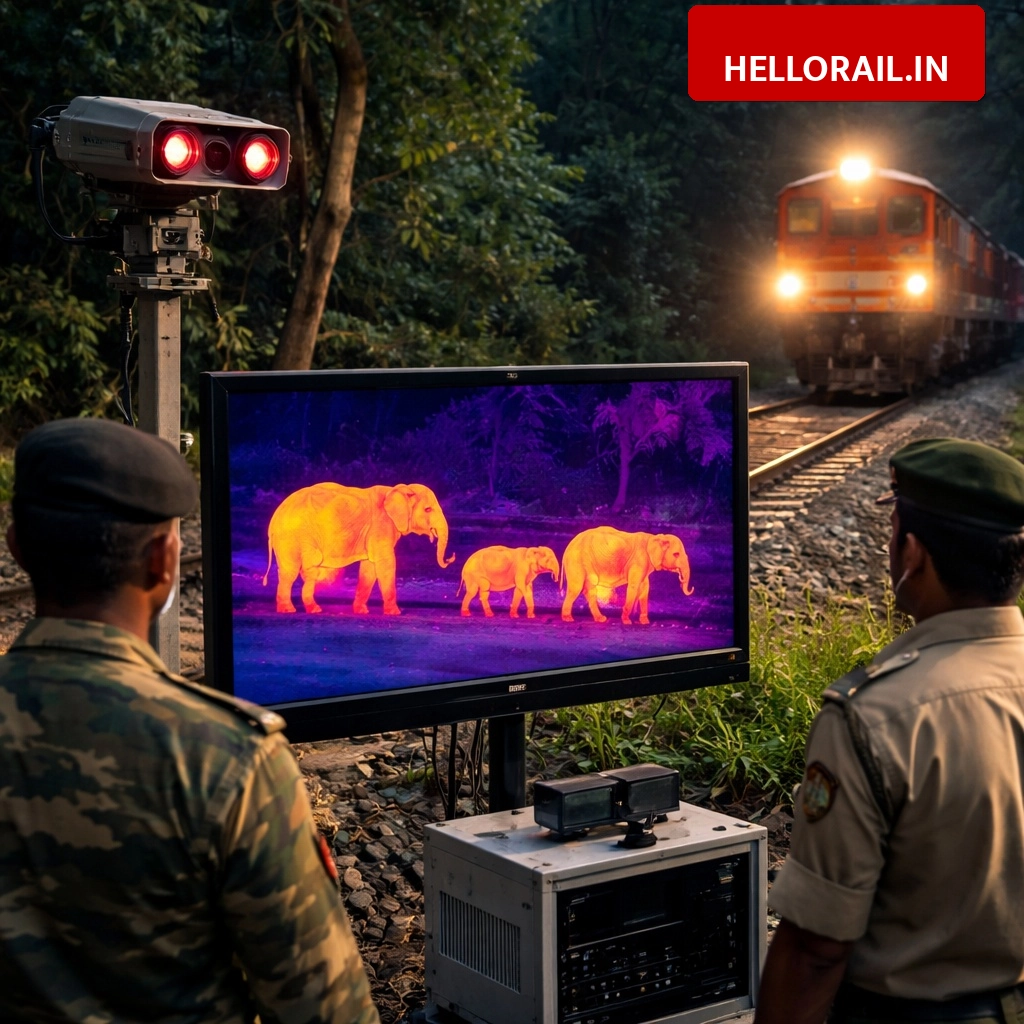

Indian Railways has joined hands with the Ministry of Defence to stop train accidents involving elephants. A pilot project has started on the Guwahati-Lumding route in Assam. This initiative uses special portable devices to help loco pilots spot wildlife from a distance.
How will the thermal camera device work?
The new portable device is equipped with thermal cameras that can detect elephants up to 8 kilometers away. This gives the loco pilot enough time to slow down or stop the train. The system is particularly useful during the night or in areas with poor visibility where animals are hard to see.
What other steps is Indian Railways taking for wildlife?
Apart from thermal cameras, the railways are using several other technologies and methods to protect animals across 14 states. These include:
- AI-enabled Intrusion Detection System: Uses fiber optic cables to send real-time alerts about elephant movement.
- Speed Restrictions: Lowering train speeds in sensitive forest zones.
- Physical Barriers: Building underpasses and ramps for animals to cross safely.
- Deterrents: Using Honey Bee buzzer devices to keep elephants away from tracks.
Which areas are being prioritized for these measures?
The Ministry of Environment, Forest and Climate Change along with Indian Railways identified 77 priority stretches. These cover about 2,000 km of tracks across 14 different states. The Northeast Frontier Railway (NFR) in Assam is one of the most critical zones where these systems are being deployed first.
Frequently Asked Questions (FAQs)
Where is the thermal camera pilot project being tested?
The pilot project is currently being implemented on the Guwahati-Lumding route in Assam to protect elephants from train collisions.
How far can the new device detect elephants?
The portable device equipped with thermal cameras can detect the presence of elephants up to 8 kilometers in advance.