





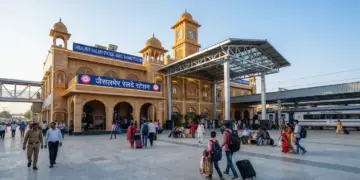

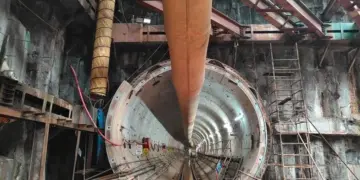
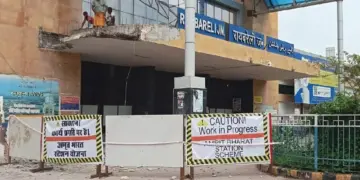
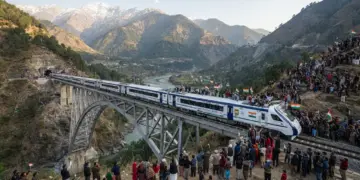
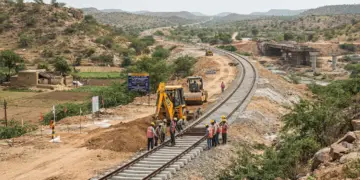
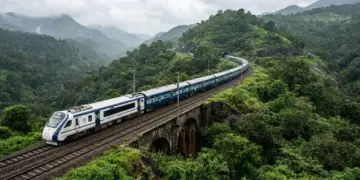
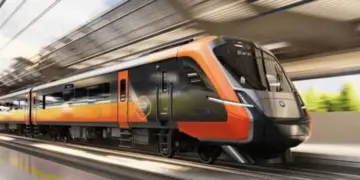
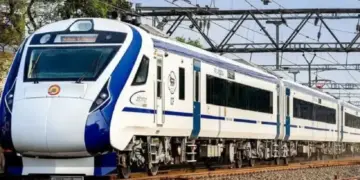
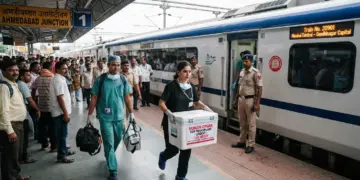


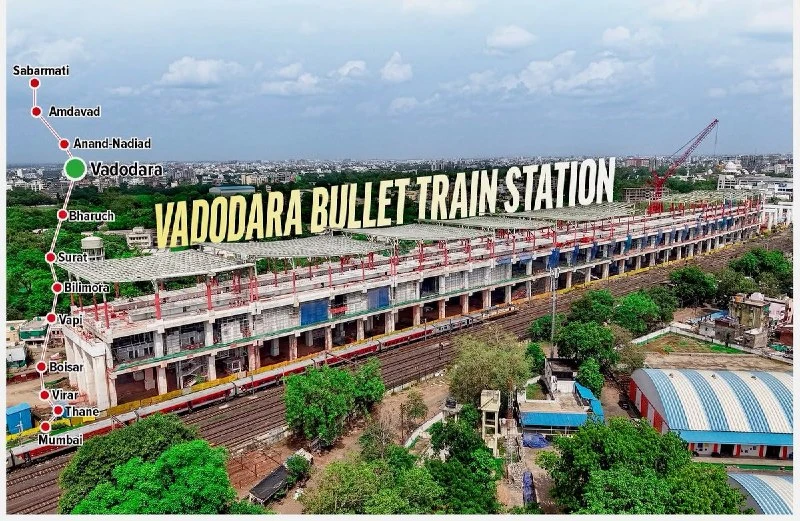

The construction of the Vadodara Bullet Train Station has hit a major milestone as slab casting is now complete and structural steel erection has commenced. This project is a crucial part of the Mumbai-Ahmedabad High-Speed Rail (MAHSR) corridor, being developed by the National High Speed Rail Corporation Limited (NHSRCL) with Larsen & Toubro executing the work under Package C-5. As the project gains momentum, commuters can expect enhanced connectivity and state-of-the-art infrastructure designed to bridge the gap between high-speed and conventional rail travel.
Key updates regarding the project progress include:
- Slab casting is finished at the Vadodara HSR station site with steel erection currently underway.
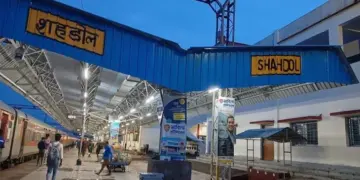
- A new Platform No. 7 is being built for Indian Railways to allow seamless interchange, linked by a travellator.
- The Gujarat section has seen over 440 kilometers of concrete pillars and elevated tracks completed.
- The Surat-Vapi 100-kilometer trial run is scheduled for August 2026, with public operations expected by August 2027.
- The full Mumbai-Ahmedabad corridor is targeted for completion by 2029.
Integrated Connectivity and Future Milestones
To ensure that passengers can easily switch between the existing Indian Railways network and the new bullet train service, NHSRCL is focusing on a highly integrated design. The addition of the new Platform No. 7 at the Vadodara railway station is a strategic move, ensuring that travelers do not face inconvenience when transitioning between different train systems. The installation of a travellator will further simplify movement, making the station a model of modern transit efficiency.
Technological Edge and Corridor Expansion
Development across the Gujarat stretch remains robust, with all eight designated HSR stations in the state expected to be ready by late 2026. Beyond physical construction, the project is also reaching significant technical milestones. In June 2025, a ₹4,100 crore contract was awarded to a consortium comprising India’s Dineshchandra R Agrawal Infracon Pvt Ltd and Germany’s Siemens. This partnership is tasked with installing an ETCS Level 2-based signaling system. This advanced technology is essential for safety and reliability, as it is capable of supporting train operations at speeds of up to 350 kmph. As these developments unfold, the vision of a high-speed revolution in India draws closer to reality.