
















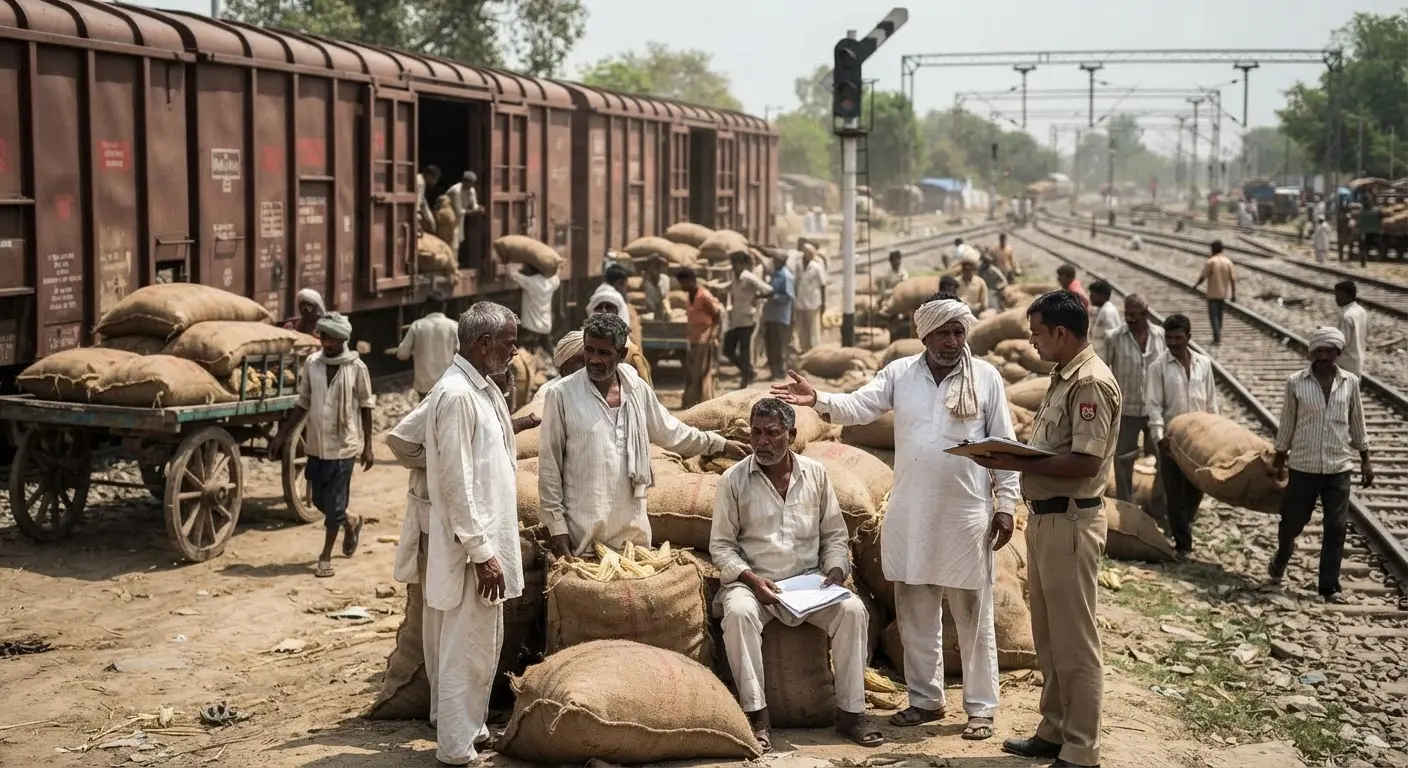

Wholesale maize traders in Budaun have officially cancelled their rail indents, citing severe logistical challenges in transporting produce to railway rake points. The decision follows a series of operational disruptions caused by traffic diversions during the ongoing Sawan month, which have made it nearly impossible for traders to load goods trains within the mandated timeframes.
- Traders cancelled rail indents due to difficulties reaching loading points caused by traffic diversions.
- Heavy penalties of three lakh rupees and two lakh rupees were imposed on groups for missing the nine-hour loading window.
- Traffic diversions occur every Saturday, Sunday, and Monday throughout the Sawan month for the Kanwar Yatra.
- Impacted loading facilities include the Ujhani rake point and the newly opened Vitroi rake point.
Impact of Route Diversions on Rail Logistics
The logistical crisis stems from traffic restrictions implemented by the Budaun District Administration to manage the influx of Kanwar Yatra pilgrims. These diversions, which restrict the movement of heavy vehicles such as trucks and tractor-trolleys on highways, were in effect from July 31 to August 3. Because these restrictions coincide with the designated loading days for Indian Railways, traders have been unable to transport their maize harvest to the railheads on time.
Under current railway regulations, traders are granted a nine-hour free time window to complete the loading of goods trains. Failing to meet this strict deadline results in hefty financial penalties. Several prominent traders, including those from Overseas and Abha Agro, reported that these fines—reaching as high as three lakh rupees in some instances—have made rail transport economically unviable under the current constraints.
Challenges at Local Rake Points
Budaun relies heavily on two primary railway rake points for agricultural exports: the Ujhani station, which gained importance following the conversion of the Bareilly-Kasganj line, and the Vitroi rake point. While these facilities are vital for the local economy, the current administrative restrictions on road movement have effectively cut off access to these stations during peak demand periods. As a result, traders have opted to cancel their indents rather than risk further financial losses due to delays beyond their control. The situation highlights the delicate balance required between managing large-scale religious processions and maintaining the smooth flow of essential agricultural logistics via the railway network.