

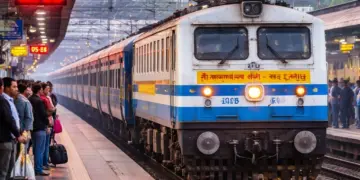


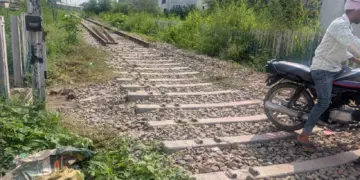



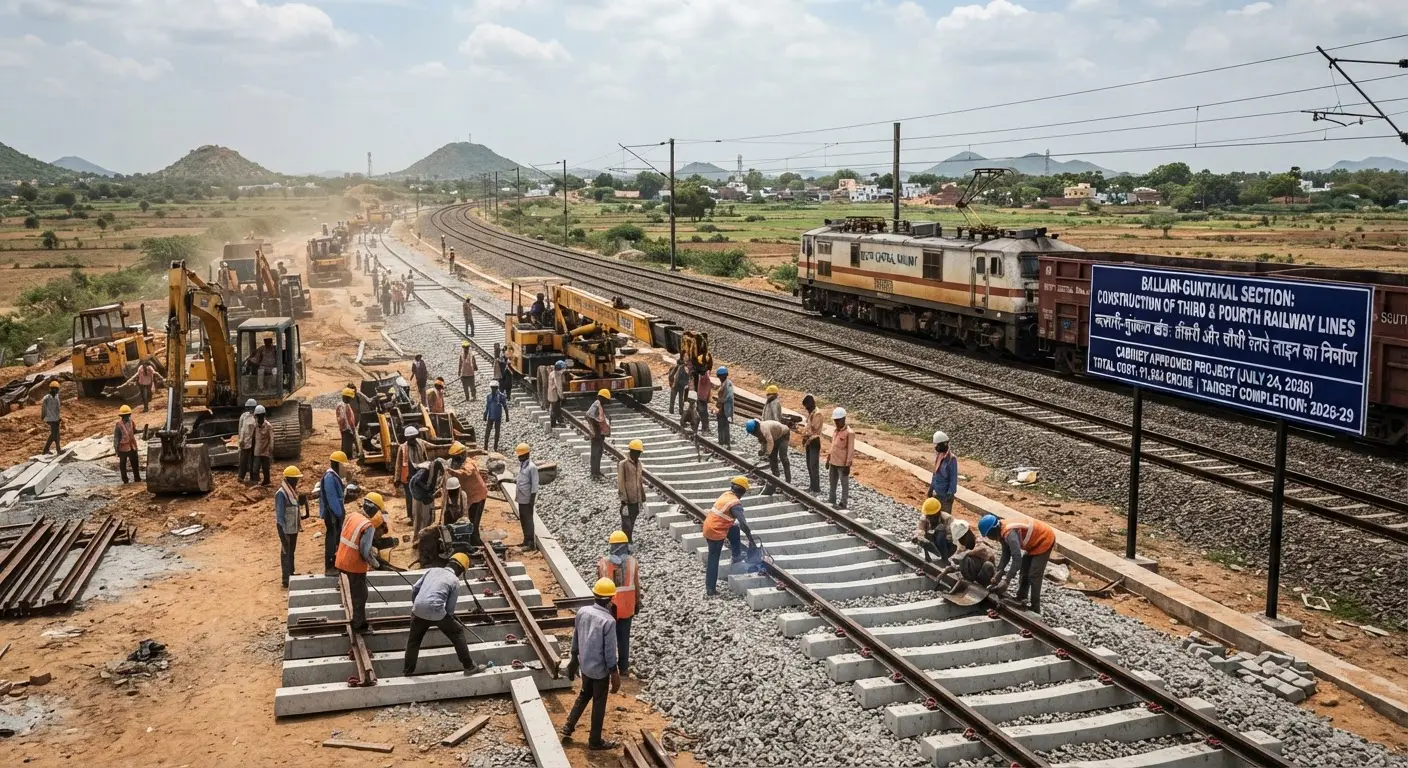

The Cabinet Committee on Economic Affairs, chaired by Prime Minister Narendra Modi, has officially approved the construction of third and fourth railway lines between Ballari and Guntakal. Announced on July 24, 2026, by Union Rail Minister Ashwini Vaishnaw, this major infrastructure project aims to strengthen connectivity across Karnataka and Andhra Pradesh. With a total budget of ₹1,264 crore, the project is scheduled for completion by the 2028-29 fiscal year.
Key highlights of the project include:
- Laying of 46 kilometers of new third and fourth railway lines.
- Significant boost to freight capacity by 16.22 million tonnes per annum (MTPA).
- Direct benefits for 99 villages and a population of seven lakh people.
- Environmental impact reduction of 1.32 crore liters in oil imports and 6.67 crore kilograms in CO2 emissions.
Boosting Freight and Regional Connectivity
The Ballari-Guntakal section is a critical corridor for industrial logistics. By adding these extra tracks, Indian Railways intends to streamline the transport of essential commodities, including iron ore, coal, limestone, dolomite, fertilizers, and food grains. This infrastructure upgrade is a vital component of the PM Gati Shakti National Master Plan, designed to reduce congestion and improve the fluidity of both freight and passenger train operations in the region.
Beyond industrial benefits, the project is set to transform local travel. It will provide improved rail access to prominent tourist landmarks such as the Ballari Fort and the Sri Kumar Swami Temple. Furthermore, the expansion enhances the logistical link to major maritime gateways, specifically the Krishnapatnam and Ramayapatnam ports, which is expected to drive economic growth in the surrounding districts.
Economic and Environmental Impact
Andhra Pradesh Chief Minister N. Chandrababu Naidu has welcomed the move, noting that approximately ₹600 crore of the total investment will be concentrated within his state. The project is not only an infrastructure milestone but also a green initiative. By shifting more freight to rail, the government expects a substantial reduction in carbon emissions and fuel consumption. Moreover, the construction phase and the subsequent operational enhancements are projected to create significant employment opportunities for the local workforce, marking a new chapter of development for the residents of Karnataka and Andhra Pradesh.