






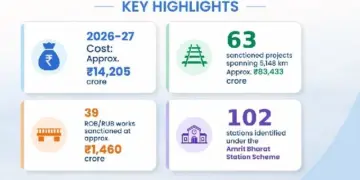

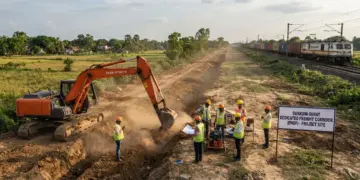

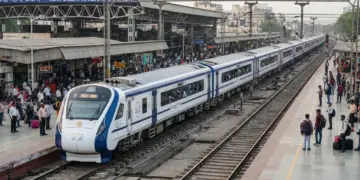

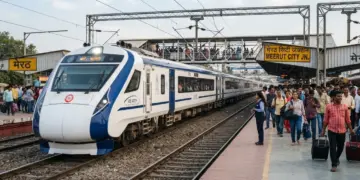



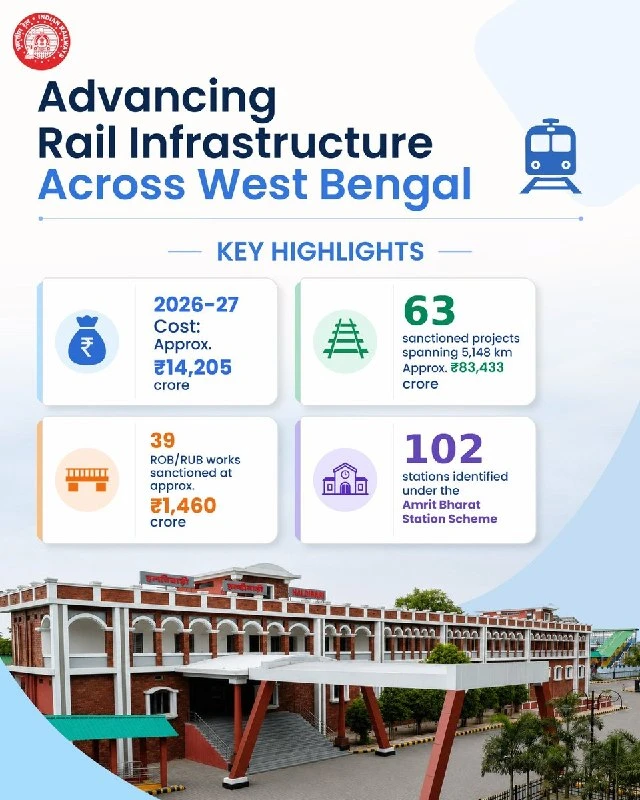

The Ministry of Railways is undertaking a massive transformation of the rail network across West Bengal, focusing on the modernization of stations, the implementation of advanced safety protocols, and the revival of high-priority infrastructure projects. Railway Minister Ashwini Vaishnav recently informed the Rajya Sabha that 63 major infrastructure projects are currently underway in the state, spanning over 5,100 kilometers with a total sanctioned investment of ₹83,433 crore.
Key highlights of the railway development plan include:
• Execution of 63 new lines, gauge conversions, and multi-tracking infrastructure projects.
• Resumption of 17 previously stalled projects, including the vital Prantik–Siuri and Balurghat–Hilli lines.
• A significant increase in annual budgetary support from an average of ₹4,380 crore (2009–2014) to a record ₹14,205 crore for the 2026–27 fiscal year.
• Formation of a dedicated task force to ensure better coordination with the West Bengal state government for faster project execution.
Focus on Strategic Connectivity
To accelerate progress, the government has prioritized clearing bottlenecks that previously halted development. The formation of a dedicated task force has been instrumental in restarting 17 stalled projects, ensuring that long-pending connectivity goals are met. With nearly ₹28,000 crore already expended on various works across the state, the focus remains on completing high-impact projects like the strategic Sivok–Rangpo line, which is set to significantly improve regional connectivity.
Record Budgetary Allocation
Financial support for West Bengal’s rail infrastructure has seen a massive surge. The transition from previous funding levels to the current record allocation of ₹14,205 crore for the 2026–27 fiscal year reflects the central government’s commitment to modernizing the state’s railway backbone. This surge in funding is expected to expedite the 5,100 kilometers of sanctioned work, ultimately reducing travel times and enhancing the passenger experience for millions of commuters across the region. As these projects reach completion, passengers can expect more efficient train operations and improved safety standards across the West Bengal rail network.