

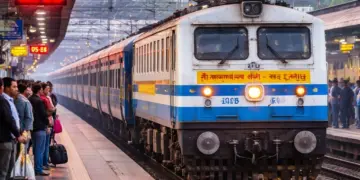







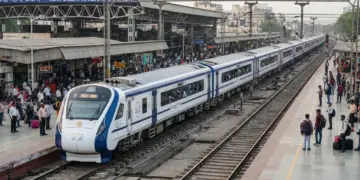

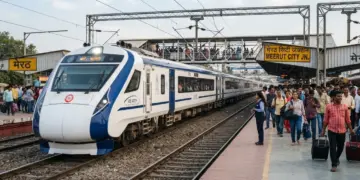


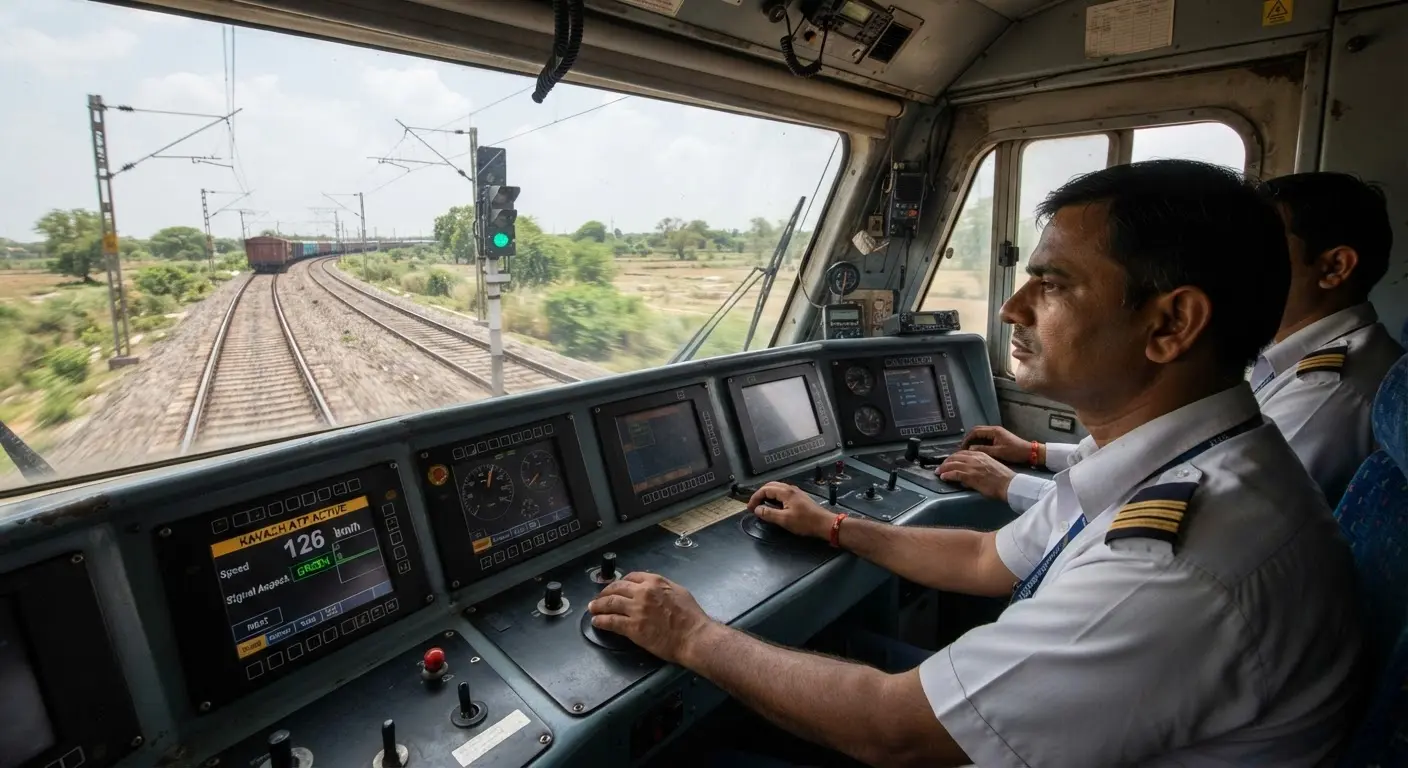

Indian Railways has hit a major safety milestone by commissioning its indigenous Automatic Train Protection (ATP) system, Kavach 4.0, across 2,490 route kilometers. This deployment covers two of the country’s busiest corridors, the Delhi-Mumbai and Delhi-Howrah routes, significantly bolstering the safety infrastructure for millions of passengers. Officially reported on July 25, 2026, this rollout represents a massive leap forward in the national mission to prevent train collisions and enhance operational oversight.
Key highlights of the Kavach 4.0 implementation include:
- Successful deployment across 2,490 route kilometers on high-density corridors.
- Achievement of Safety Integrity Level-4 (SIL-4) certification, the highest global safety standard.
- Extensive infrastructure including 11,253 km of optical fibre cable and 1,668 telecom towers.
- Comprehensive training completed for over 94,000 personnel, including 57,000 locomotive pilots.
- Future-ready development with Kavach 5.0 already being planned for suburban networks.
Enhanced Safety and Modern Technology
Railway Minister Ashwini Vaishnaw confirmed that **Kavach 4.0 brings critical technological advancements**, such as superior location accuracy and a seamless station-to-station interface via optical fibre cable. The system is now directly integrated with the **Electronic Interlocking System**, ensuring it can be scaled effectively across the entire Indian Railways network. The project required a monumental logistical effort, including the establishment of **958 station data centers** to manage real-time train movements.
Investment and Future Roadmap
The financial commitment to this safety upgrade is substantial. Indian Railways is investing approximately **Rs 50 lakh per kilometer** for trackside infrastructure, while the cost to equip a single locomotive with the system stands at roughly **Rs 80 lakh**. Developed in collaboration with domestic firms like Medha Servo Drives, Kernex Microsystems, and HBL Power Systems, the technology has evolved rapidly since its adoption as the national standard in July 2020.
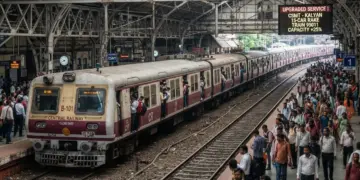
Looking toward the future, the national transporter is not stopping at version 4.0. Work is already underway on **Kavach 5.0**, which is specifically engineered for high-density suburban operations. This upcoming iteration aims to reduce train headways, particularly for Mumbai’s iconic local trains, ensuring that even the busiest urban corridors benefit from the highest standards of safety and efficiency.