


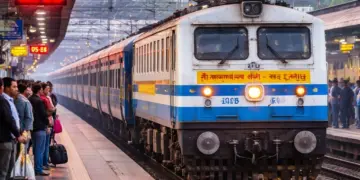

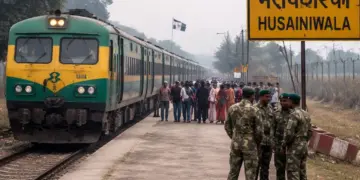
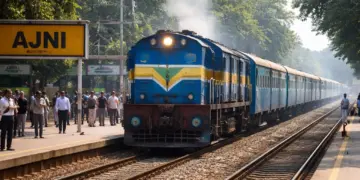

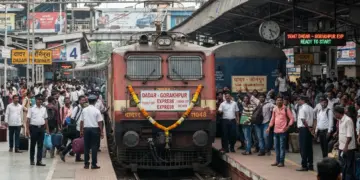
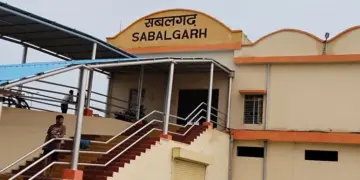
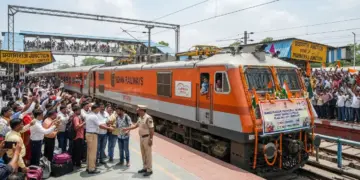




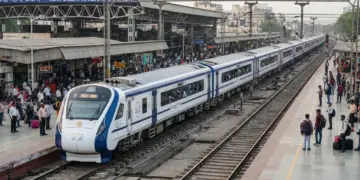

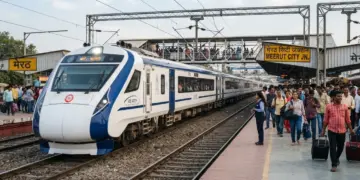


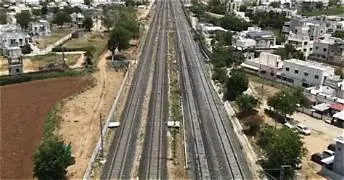

The Cabinet Committee on Economic Affairs, led by Prime Minister Narendra Modi, has greenlit two major railway infrastructure projects aimed at transforming rail connectivity across Odisha and Jharkhand. With a total investment of ₹3,907 crore, these multi-tracking projects are set to be completed by the 2030-31 financial year. These developments focus on critical capacity expansion, adding 145 kilometers of new line capacity to the Indian Railways network.
- Paradip–Haridaspur doubling: A key project to enhance rail infrastructure in Odisha.
- Rajkharsawan–Dangoaposi fourth line: A vital expansion spanning both Odisha and Jharkhand.
- Freight capacity boost: Expected to facilitate an additional 44 million tonnes per annum in freight transport.
- Social impact: Improved connectivity for 1.4 million people across 1,526 villages.
Strengthening Logistics and Industrial Growth
Aligned with the PM Gati Shakti National Master Plan, these projects are designed to streamline the movement of essential industrial commodities. The expanded lines will primarily serve the transport of coal, iron ore, dolomite, limestone, and gypsum, which are the backbone of India’s industrial sector. By removing bottlenecks in these high-traffic corridors, the government aims to enhance logistics efficiency and support the broader goals of the Atmanirbhar Bharat initiative.
Environmental and Tourism Benefits
Beyond economic gains, these railway projects prioritize sustainability. The increased track capacity is projected to save approximately 6 crore liters of oil imports while reducing carbon dioxide emissions by 29 crore kilograms—an environmental impact equivalent to planting 10 million trees.
Furthermore, the projects are set to boost regional tourism by providing easier access to prominent cultural and natural landmarks. Travelers and pilgrims will soon enjoy improved connectivity to the Lalitgiri Buddhist complex, the historic Shri Baladevjew Temple, and the scenic Meghahatuburu Hills. These infrastructure upgrades are also expected to act as a catalyst for local employment and self-employment opportunities, ensuring that the benefits of modernized rail travel reach the grassroots level in these four districts.