










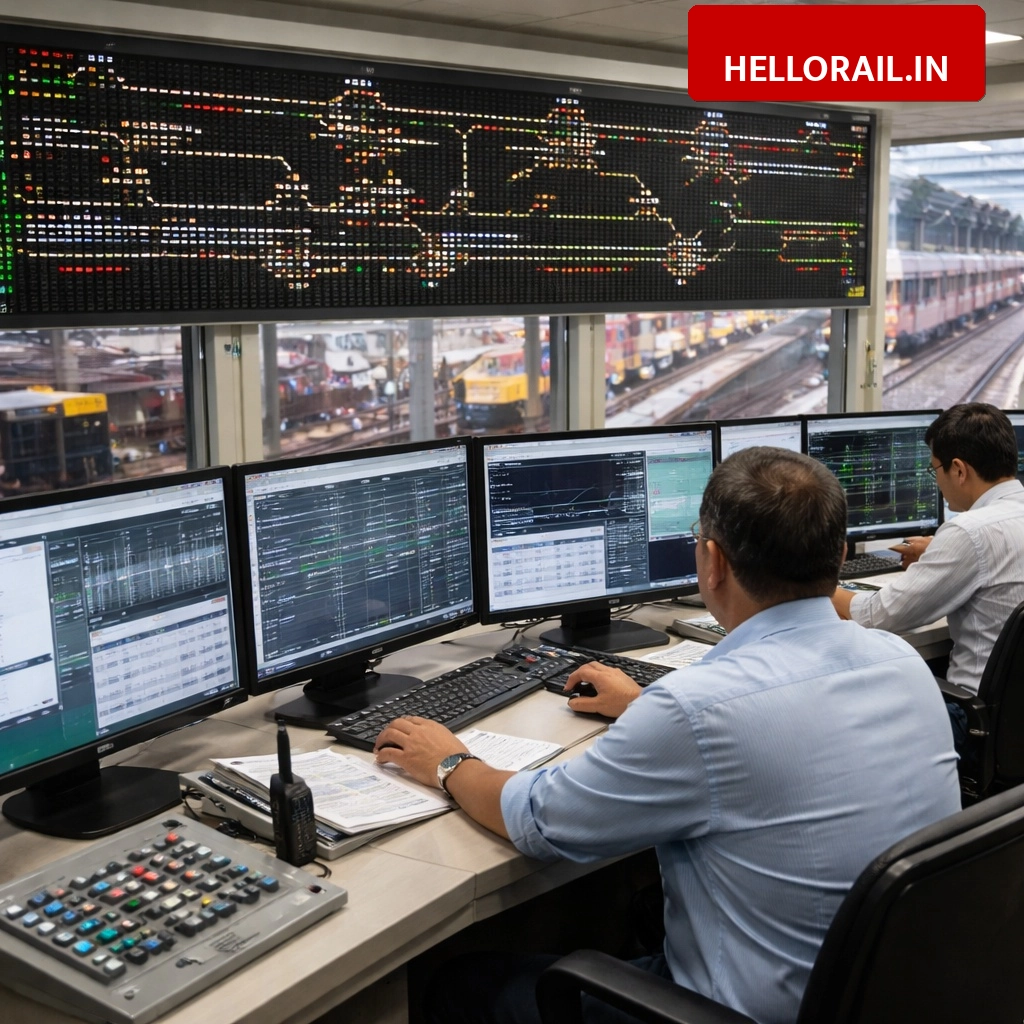

Indian Railways has approved a project worth ₹405 crore to upgrade the signaling system in the Eastern Railway zone. This move will replace old relay-based systems with modern Electronic Interlocking (EI) technology. The project focuses on improving safety and efficiency on high-density routes where train traffic is very heavy.
🚨: Railway safety boost: AI and Digital Twins to monitor tracks 24/7 in Northeast Frontier Railway।
Which stations will get the new signaling system?
The upgrade will cover a total of 32 locations within the Eastern Railway network. This includes 25 stations that currently use Panel Interlocking (PI) or Route Relay Interlocking (RRI) and 7 Intermediate Block Signalling (IBS) locations. These areas are part of the High Density Network (HDN) and Highly Utilised Network (HUN) where most trains operate.
What are the benefits of Electronic Interlocking?
Railway officials stated that the old relay systems were aging, which led to higher maintenance costs and a greater risk of failures. The new Electronic Interlocking system will provide several advantages:
- Higher reliability in train operations
- Better safety standards for passengers and freight
- Faster detection of faults in the system
- Support for advanced technologies like Kavach and Automatic Block Signalling
Project Details at a Glance
| Detail | Information |
|---|---|
| Total Project Cost | ₹405 Crore |
| Railway Zone | Eastern Railway (ER) |
| Total Stations | 32 |
| Technology Used | Electronic Interlocking (EI) |
| Focus Areas | HDN and HUN Routes |
Frequently Asked Questions (FAQs)
What is the cost of the Eastern Railway signaling project?
The Indian Railways has approved a budget of ₹405 crore for this signaling upgradation project.
Why is the railway replacing the old signaling system?
The old relay-based technology had operational limitations due to aging infrastructure, which increased maintenance needs and failure risks.