





















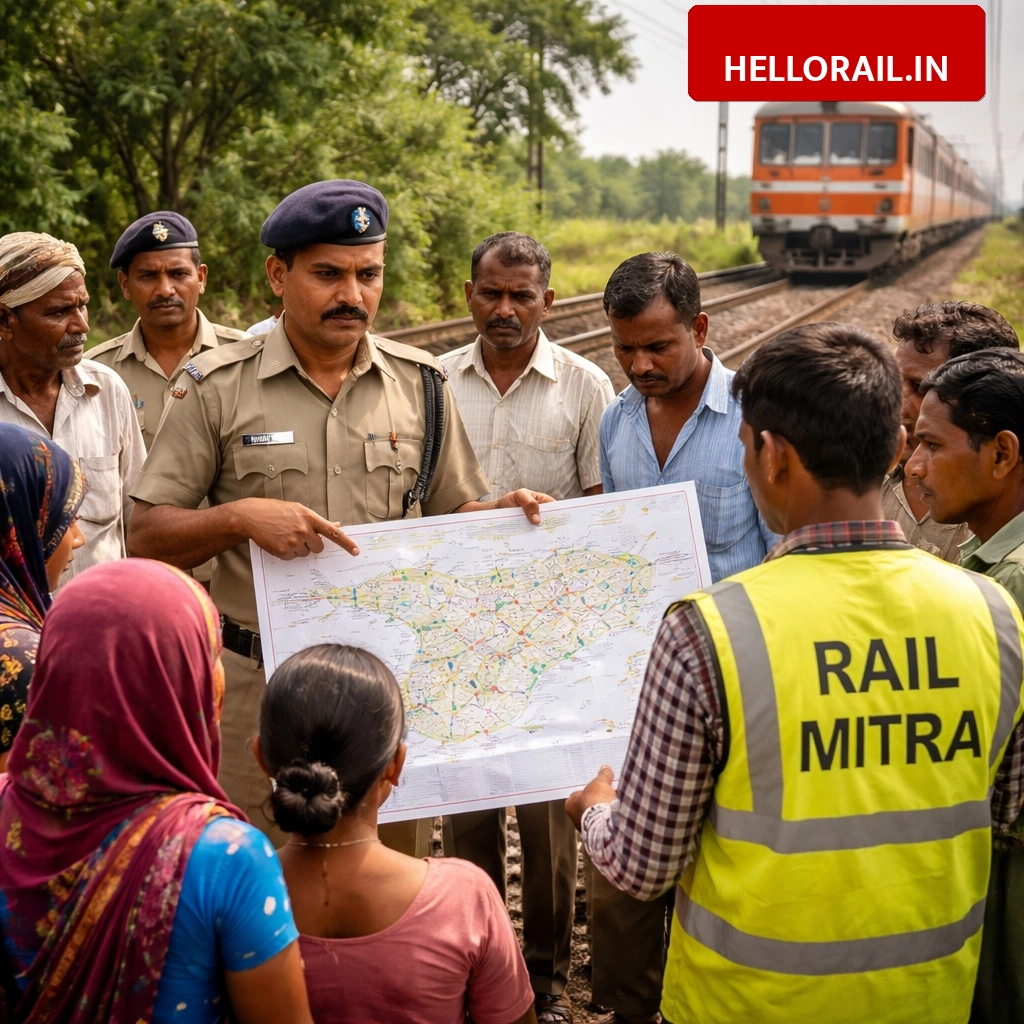

The Government Railway Police (GRP) started a new action plan to stop people from throwing stones at trains. This move focuses on vulnerable areas where such incidents happen often. The plan involves mapping nearby villages and involving local people to keep the tracks safe.
Who are Rail Mitras and what is their role
The GRP created a network of 856 Rail Mitras to act as local informants. These members include Gram Pradhans, Anganwadi workers, ASHA bahus, and Panchayat Mitras. They will share information about any suspicious activity along the railway tracks to prevent stone pelting incidents.
Which areas are covered under the new mapping
The GRP mapped 140 villages around specific stations to increase vigilance. The data of these villages and 96 history-sheeters is already uploaded to the departmental website. The covered areas include:
- Rae Bareli
- Rupamau
- Arakha
- Dariyapur to Dalmau
- Unchahar to Raghuraj Singh stations
What are the strict measures for offenders
Stone pelting is a serious crime under the Railway Act and can lead to imprisonment. Recently, the RPF and UP Police caught two suspects for pelting stones at the Lucknow-New Delhi Swarna Shatabdi Express on June 11, 2026. The railways will now use more technology-driven surveillance in areas where CCTV cameras are missing, especially for Vande Bharat trains.
Frequently Asked Questions (FAQs)
Who are the Rail Mitras appointed by the GRP?
Rail Mitras are 856 local representatives including Gram Pradhans, ASHA workers, and Panchayat Mitras who report suspicious activities near tracks.
What happens if someone throws stones at a train?
Stone pelting is a serious criminal offense under the Railway Act and the offenders can face strict legal action including imprisonment.