




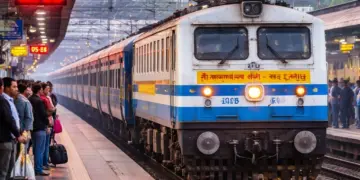


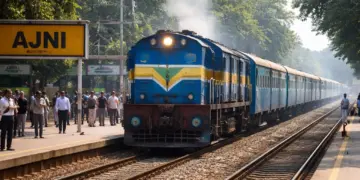

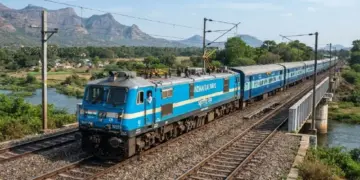


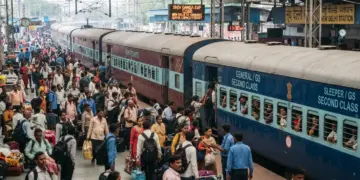
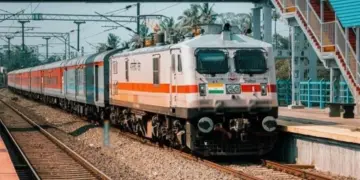
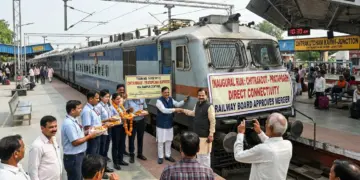





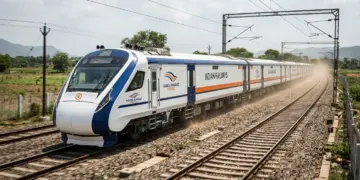




Indian Railways will install indigenous ballast-less tracks on station loop lines and platform tracks. This move will increase the speed of trains on these sections from 15 kmph to 60 kmph. The goal is to make travel safer and more punctual while reducing the time trains spend waiting at the outer signals.
ℹ: New Train Announcement: Indian Railways to extend Delhi-Rewari DMU service to Ringas Junction।
What is the new technology and who developed it
The Research Design and Standards Organisation (RDSO) developed the indigenous technology called BLT-IFS (CT-52). These concrete tracks are designed to handle heavy trains with a 25-tonne axle load. RDSO will monitor the first three projects to ensure quality and performance.
Key benefits of ballast-less tracks
- Train speed on loop lines will rise from 15 kmph to 60 kmph.
- Wait times for trains at the outer signals will decrease.
- Cleaning around platforms becomes easier.
- Risk of track sinking or breaking is reduced.
Official orders and warranty terms
Railway Board Executive Director Track Anurag Kumar issued the orders for this implementation on 15 May 2026. Companies responsible for installing these track systems must provide a performance warranty for five years to ensure long-term durability.
Frequently Asked Questions (FAQs)
What is the speed limit on loop lines after the new track installation?
The speed of trains on station loop lines and platform tracks will increase from the current 15 kmph to 60 kmph.
Which organization developed the BLT-IFS (CT-52) technology?
The indigenous ballast-less track technology BLT-IFS (CT-52) was developed by the Research Design and Standards Organisation (RDSO).