











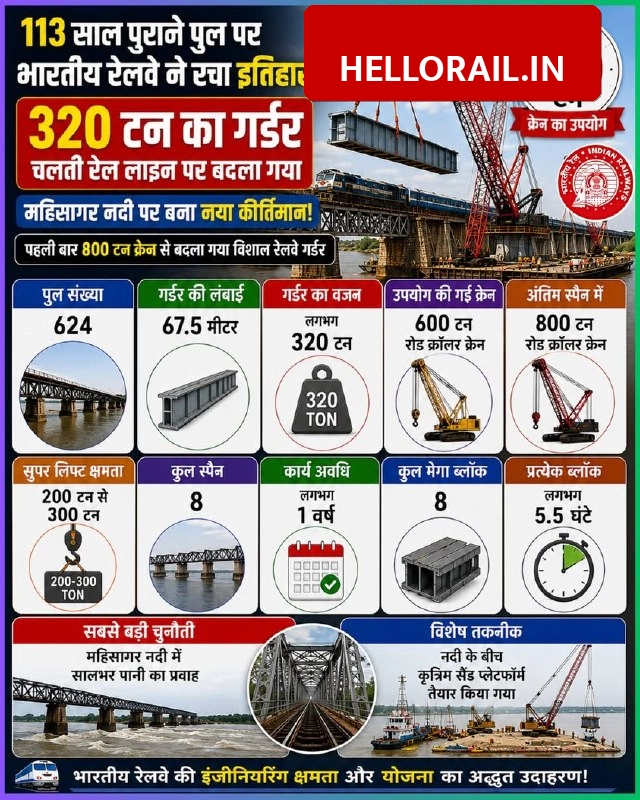

The Vadodara Division of Western Railway achieved a major engineering milestone by completing the re-girdering of the 113-year-old Bridge Number 624 over the Mahisagar river. For the first time in Indian Railways history, massive steel open-web girders were replaced on a running railway line using high-capacity road crawler cranes. The project was completed over one year in two distinct phases.
How was the replacement process managed?
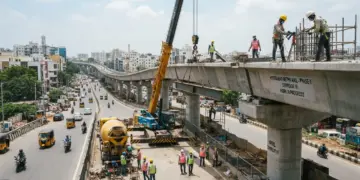
The work was divided into two phases to handle the technical challenges of the river. In the first phase, two 600-ton crawler cranes were placed on a 30-meter wide artificial sand bed created in the river to replace six central spans. For the final two spans, an 800-ton super-lift crane was used due to limited space. The entire project required eight mega blocks of approximately five and a half hours each.
What are the technical details of the bridge work?
| Feature | Details |
|---|---|
| Bridge Age | Built in 1913 (113 years old) |
| Girder Weight | Approximately 320 tons each |
| Girder Length | 67.5 meters |
| Total Spans | 8 spans replaced |
| Equipment Used | 600-ton and 800-ton cranes |
DRM Raju Bhadke stated that the project was completed within the deadline with minimum traffic disruption. The use of new technology helped save costs and reduced the need for extensive power and traffic blocks. This update will improve the safety, speed, and reliability of trains on the Ahmedabad-Vadodara section.
Frequently Asked Questions (FAQs)
What was special about the Mahisagar bridge project?
It is the first time in Indian Railways history that such large steel open-web girders were replaced on a running line using heavy road crawler cranes.
How will this affect train travel between Ahmedabad and Vadodara?
The replacement of the old girders will lead to a significant increase in the safety, speed, and reliability of trains running on this section.