












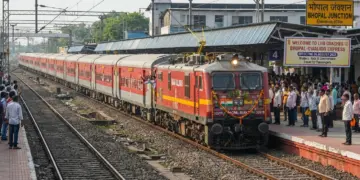
















Indian Railways has introduced strict rules to stop illegal vending on trains and platforms. Under the Jan Vishwas (Amendment) Act, 2026, the Railway Protection Force (RPF) has started taking tough action against people selling food and items without a valid license. These new rules became fully effective from July 1, 2026.
ℹ️: IRCTC Update: Small typing error in train ticket can lead to heavy fine।
What are the new penalties for illegal vending?
The railway has set different penalty levels based on how many times a person is caught. For the first few offenses, a direct fine of ₹2,000 can be charged. If the person does not pay, the case goes to court where the fine can increase to ₹5,000 or lead to three months in jail.
What happens to repeat offenders?
The railway will now maintain a detailed record, similar to a profile, for every illegal vendor to track repeat offenses. If a person is caught three times, they face a ₹5,000 fine and one year of imprisonment, or both. For those caught four or more times, the punishment remains a year in jail and a ₹5,000 fine.
Other penalty updates under Jan Vishwas Act
| Offense | Fine Amount |
|---|---|
| Smoking in Railway Premises | ₹2,000 |
| Begging | ₹2,000 |
| Unauthorized entry in Ladies Coach | ₹2,500 |
| Carrying Dangerous Goods | ₹10,000 |
| Traveling without Ticket | ₹500 + Fare |
Official representatives including NCR CPRO Shashikant Tripathi and Kota Division Sr. DCM Saurabh Jain confirmed that no one will be allowed to sell items without an ID card. Additionally, the railway board has decided that these fine amounts will automatically increase by 10% every three years to match economic changes.
Frequently Asked Questions (FAQs)
What is the penalty for selling food without a license in trains?
First-time offenders may pay ₹2,000. However, repeat offenders (caught 3 or more times) can face a ₹5,000 fine and up to one year of imprisonment.
When did these new railway rules come into effect?
The updated rules under the Jan Vishwas (Amendment) Act, 2026, became fully effective from July 1, 2026.