

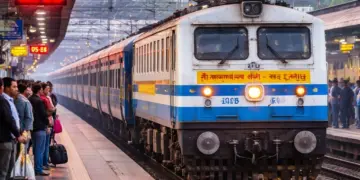

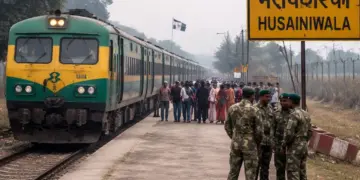







Indian Railways has started a major safety campaign following a crack found in a sleeper coach of the Delhi-Shri Mata Vaishno Devi Special train at Ludhiana station. On the orders of the Railway Board, a seven-day special inspection drive began on June 7, 2026, to check Integral Coach Factory (ICF) coaches. The main goal is to identify and remove old or rusted coaches to ensure passenger safety.
🗞️: Railway Safety Inspection: New rail sections and ICF coaches under strict review।
What is the scope of this safety inspection?
The Railway Board has directed a detailed technical check of all ICF coaches. Officials will focus on sensitive parts that are prone to rust and structural weakness. To make the process accurate, the railway will use modern tools like endoscopy cameras and ultrasonic thickness gauges. Any coach found to be severely rusted or dilapidated will be removed from service immediately.
Who is monitoring the process and what are the next steps?
Senior officials from the Ministry of Railways, Railway Board, zonal railways, and workshops are managing this drive. To maintain quality, headquarters and divisional officers will perform a super-check of the inspections. Additionally, an audit of all workshops that handle Periodic Overhauling (POH) of coaches will be completed within one month. The Railway Board is also simplifying the Standard Operating Protocols (SOPs) to quickly identify and scrap coaches that are too expensive to repair.
Frequently Asked Questions (FAQs)
What triggered this special safety drive by Indian Railways?
The drive was started after a crack was discovered in a sleeper coach of the Delhi-Shri Mata Vaishno Devi Special train at Ludhiana railway station on June 6, 2026.
Which tools are being used to check the coaches?
Railway officials are using advanced equipment including endoscopy cameras and ultrasonic thickness gauges to detect internal rust and structural weaknesses.