
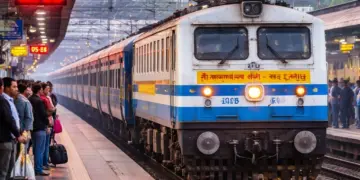

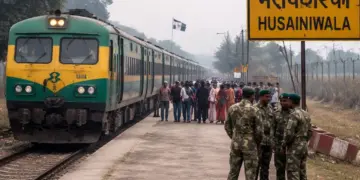
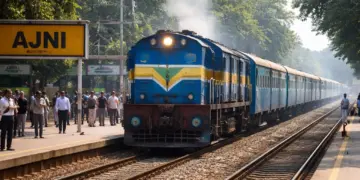





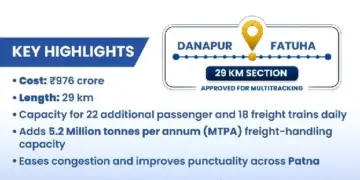




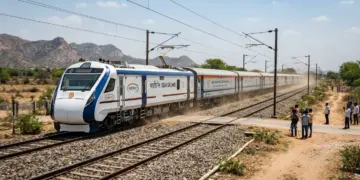



Indian Railways has officially approved a major infrastructure project aimed at decongesting the vital Delhi-Howrah corridor. The 29-kilometer multi-tracking project covering the Danapur-Fatuha section in Bihar has been sanctioned with a budget of ₹976 crore. This strategic expansion is designed to streamline traffic on one of the busiest rail routes in the country, ensuring smoother operations for both commuters and freight movement.
Key highlights of the project include:
• Capacity expansion: The project will facilitate the operation of 40 additional trains daily, including 22 passenger trains and 18 freight services.
• Infrastructure upgrade: Construction of third and fourth lines between Danapur and Patna, a new third line between Rajendra Nagar and Patna Sahib, and third and fourth lines between Patna Sahib and Fatuha.
• Freight boost: An anticipated increase in freight handling capacity by 5.2 million tonnes per year.
• Strategic importance: The project supports the Energy, Mineral and Cement Corridor and provides rail connectivity to the upcoming 2120 MW thermal power plant in Chausa, Buxar.
Enhancing Efficiency on the Delhi-Howrah Corridor
Managed by the East Central Railway (ECR), this development is a critical component of the ongoing quadrupling efforts across the Delhi-Deen Dayal Upadhyaya Junction-Patna-Kiul-Bhagalpur-Khana-Howrah route. By adding these dedicated lines, the Railways aims to minimize train delays and significantly improve punctuality for passengers traveling through the Patna rail corridor.
Union Railway Minister Ashwini Vaishnaw has emphasized that this project is essential for long-term rail growth and operational flexibility. As passenger numbers continue to rise, the addition of these tracks will provide the necessary breathing room for the network, reducing congestion at major nodes. Beyond immediate operational benefits, the project is expected to drive socio-economic development in Bihar by improving the logistics chain for industries reliant on the rail network for mineral and energy transport. With the approval finalized in early August 2026, the project marks a significant step forward in the modernization of India’s railway infrastructure.