

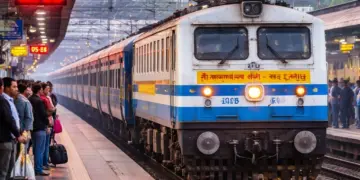

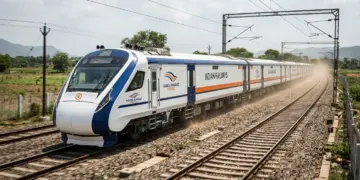




Indian Railways is introducing Atmospheric Water Generator (AWG) technology to create pure drinking water from air moisture. This move comes as a solution to the water crisis caused by falling groundwater levels at various stations, colonies, and hospitals. The initiative was highlighted on World Environment Day 2026 to promote sustainable water management.
How does the AWG technology work?
These machines work on the principle of condensation to extract water from the air. They are most effective in environments with more than 30% humidity and can produce up to 1,000 liters of water per day. The extracted water is purified using UV and carbon filters, and essential minerals like calcium and magnesium are added to make it safe for drinking.
Where will these machines be installed?
The Railway Board has asked all zonal railways, production units, and PSUs to identify suitable locations for installation. Following successful trials in Secunderabad in 2019 and Mumbai in 2022, the railway plans to install these machines at stations like Shankargarh, Chunar, and Chopan under North Central Railway, as well as in Dhanbad.
Who is leading this project and how is it funded?
Ajay Jha, Director of Environment and Housekeeping Management at the Railway Board, issued the directions to accelerate this plan on May 15, 2026. The project is funded using 1% of the cost of infrastructure projects approved since 2016, which is specifically reserved for environmental works.
Frequently Asked Questions (FAQs)
What is AWG technology in Indian Railways?
AWG stands for Atmospheric Water Generator. It is a technology that extracts moisture from the air and converts it into pure drinking water using filtration and mineralization.
How much water can one AWG machine produce?
A single AWG machine can produce up to 1,000 liters of water per day, provided the humidity level in the air is above 30%.