











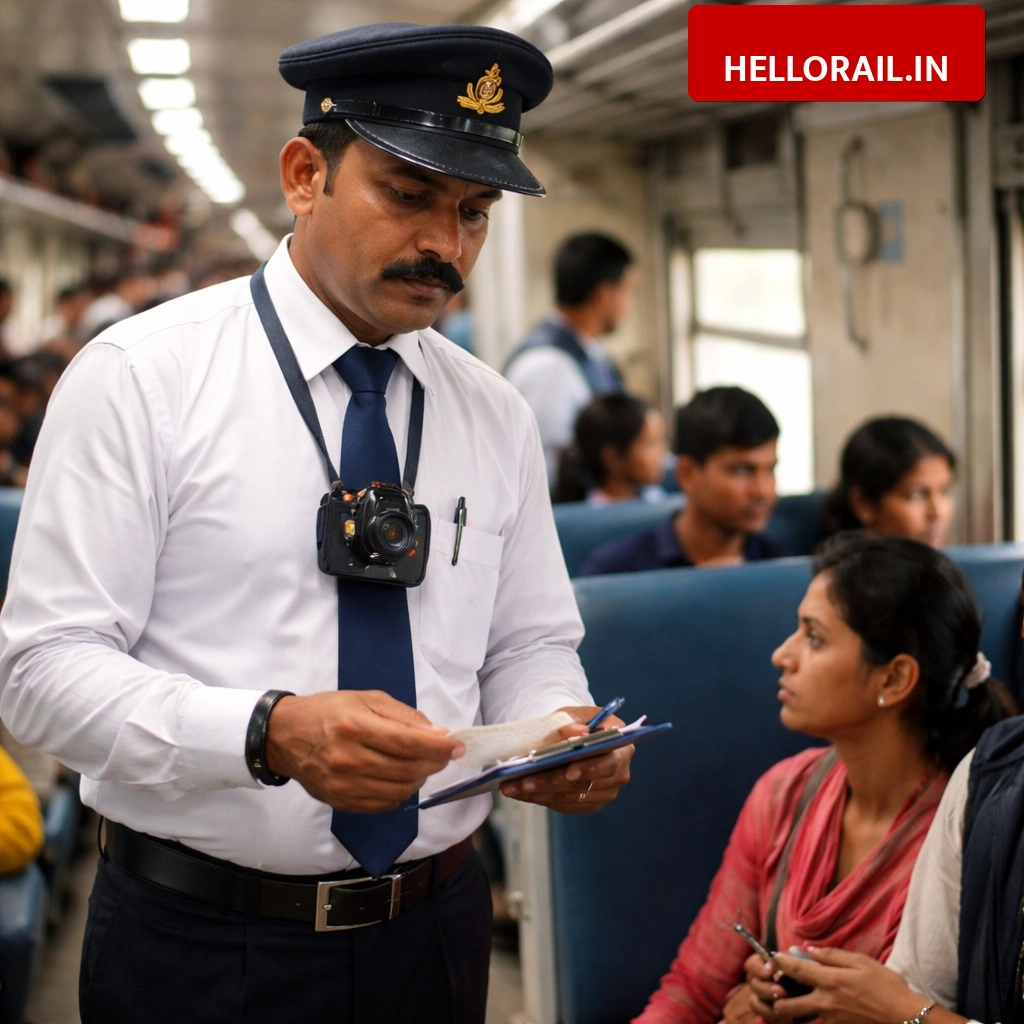

Indian Railways is introducing body-worn cameras for its Travelling Ticket Examiners (TTEs) to make ticket checking more transparent. This move aims to reduce disputes between passengers and staff while ensuring better safety for everyone. The system is being rolled out in a phased manner across different railway divisions.
ℹ️: New Delhi Railway Station Redevelopment: 30 trains to be shifted soon, check details।
What are the features of the TTE body cameras?
The cameras are designed to record everything that happens during a ticket check. They come with high-quality recording features and a long battery life to last through long shifts. The key technical details are as follows:
| Feature | Details |
|---|---|
| Video Quality | HD Video |
| Special Modes | Night Vision |
| Audio | Audio Recording included |
| Security | Tamper Proof system |
| Battery Life | Approximately 20 hours |
Where is this project being implemented?
The initiative started as a pilot project in several zones. The Mumbai Division of Central Railway began this on May 4, 2023. Later, the Waltair Railway Division introduced the cameras in June 2024. Currently, Western Railway is also equipping its ticket checkers with these devices to increase accountability and deter ticketless travel.
How will this benefit passengers and staff?
The recorded footage will serve as official evidence in case of arguments or false complaints. According to officials, this will protect TTEs from false accusations and stop passengers from misbehaving. Vineet Abhishek, CPRO of Western Railway, noted that the pilot project helped increase fine recovery from 20% to 80% as people became more disciplined.
Frequently Asked Questions (FAQs)
Which railway divisions have already started using body cameras?
The pilot project was initiated in the Mumbai Division of Central Railway in May 2023. It was later implemented in the Waltair Division and is currently being rolled out by Western Railway.
What is the main purpose of providing cameras to TTEs?
The main goal is to maintain transparency, prevent misbehavior, and provide evidence in case of disputes or false complaints during ticket inspections.