







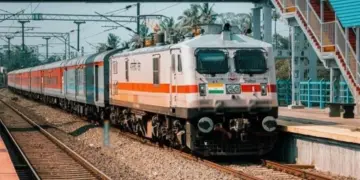



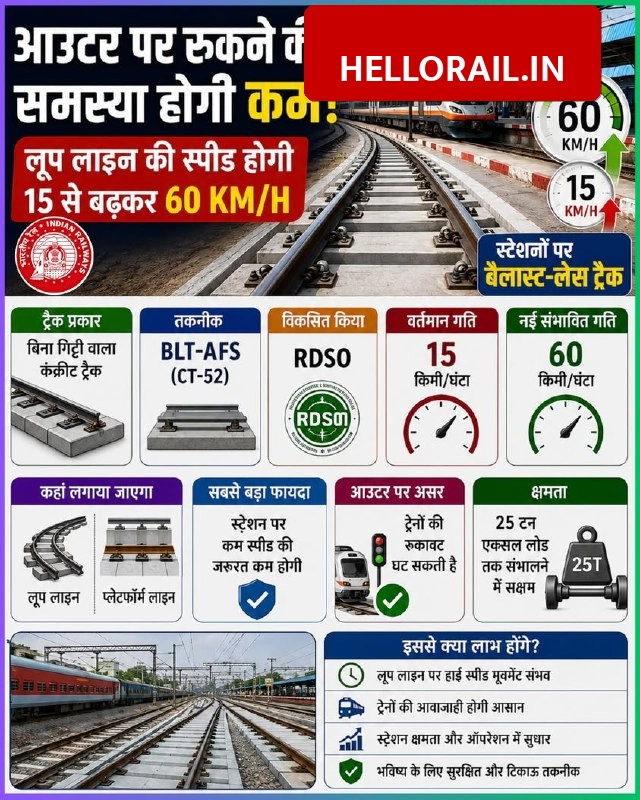

Indian Railways announced a plan to install indigenous ballast-less tracks on loop lines and platform tracks at stations. This move will increase the speed of trains on these lines from the current 15 km/h to 60 km/h. The initiative aims to reduce delays and improve punctuality for passengers.
What is BLT-iFS technology and how will it help
The railways will use ‘BLT-iFS (CT-52)’ technology, which is a concrete track designed to handle heavy loads of 25 tons per axle. This high-tech track does not use stones (ballast), making it more stable. It will help trains move faster into platforms, reducing the time they spend waiting at outer signals.
Key details of the infrastructure upgrade
The Research Design and Standards Organisation (RDSO) will supervise the first three projects before the technology is rolled out across the country. This is part of a larger effort to modernize tracks. The following table shows recent track speed updates:
| Project/Update | Speed Change/Status | Details |
|---|---|---|
| Loop Lines (New) | 15 km/h to 60 km/h | Using BLT-iFS technology |
| Loop Lines (General) | 15 km/h to 30 km/h | Allowed since 2021 |
| East Coast Railway | 30 km/h to 40 km/h | Approval sought May 2026 |
| Sectional Tracks | 110 km/h and above | Over 78% tracks upgraded |
How will this impact passenger travel
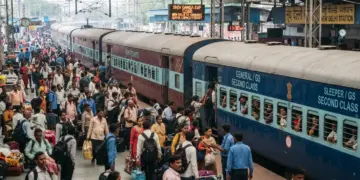
Many trains currently slow down significantly or stop at outer signals because loop lines have very low speed limits. By increasing the speed to 60 km/h, trains can enter stations more quickly. This will lead to better punctuality, improved safety, and a more comfortable journey for passengers.
Frequently Asked Questions (FAQs)
What is a ballastless track?
A ballastless track is a concrete slab track that does not use crushed stones (ballast) for support. It is more durable and allows for higher speeds and better cleanliness at stations.
Will this reduce train delays at stations?
Yes, increasing loop line speeds to 60 km/h will allow trains to enter platforms faster, which reduces the time trains spend waiting at outer signals.